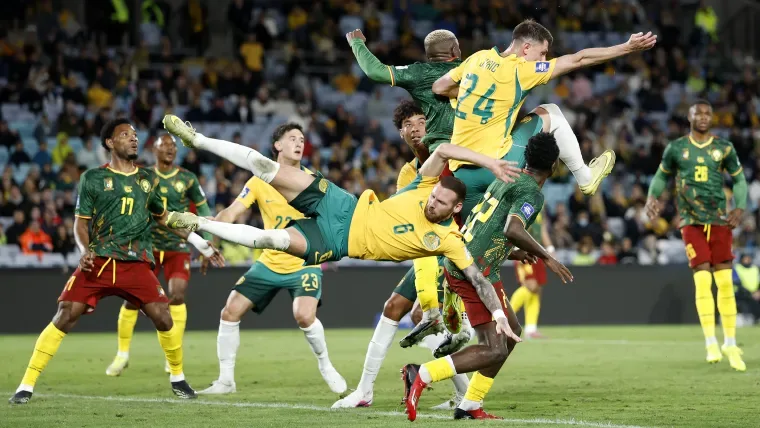
The cruelest equation in football isn’t goal difference or coefficient rankings—it’s the simple arithmetic that reduces a lifetime of dedication to 26 names on a sheet. After being ruled out four years ago with a devastating knee injury, the Socceroos veteran has missed out on another FIFA World Cup, beaten by two uncapped players who represent Tony Popovic’s vision of the future rather than his debt to the past.
This isn’t just another selection controversy—it’s the mathematical brutality that defines every World Cup cycle, where sentiment loses to strategy and loyalty surrenders to logistics.
The Numbers Game That Breaks Hearts
Football’s most ruthless democracy operates on cold calculation. Twenty-six spots. Thirty-plus genuine contenders. The difference between career vindication and eternal regret measured in decimal points of form, fitness, and tactical fit. Popovic’s decision to prioritise youth over experience reflects a manager who understands that World Cups aren’t won on reputation—they’re conquered by legs that can last 120 minutes in North American heat and minds unencumbered by the weight of past disappointment.
The veteran’s omission stings precisely because it feels personal, but squad selection operates beyond individual narratives. When Paraguay await in the group stage finale that could determine qualification, every selection becomes about matchups, pace, and the capacity to execute under pressure that can crush seasoned professionals. Two uncapped players haven’t carried the burden of previous World Cup disappointment—sometimes that mental freshness outweighs a decade of international service.
Popovic’s Generational Gamble
This selection philosophy represents Popovic’s most significant departure from Australia’s traditional approach of rewarding loyalty with opportunity. Previous Socceroos coaches built squads around core experience, trusting that World Cup nous would compensate for physical decline. Popovic has flipped that equation, betting that hunger and adaptability matter more than institutional memory when facing Brazil or navigating the chaos of tournament football.
The decision exposes Australian football’s perpetual tension between honouring the past and embracing the future. Every veteran omission creates a ripple effect through the player pool—if experience doesn’t guarantee selection, what does? Popovic’s answer seems clear: current form, tactical versatility, and the ability to improve throughout a tournament rather than simply maintain existing standards.
The Wider World Cup Equation
Squad selection controversies aren’t uniquely Australian—they’re the universal language of World Cup preparation. Netherlands coach Ronald Koeman has faced similar criticism for omitting established names, while Brazil’s talent surplus creates heartbreak for players who would start for most national teams. The difference lies in depth and options. Australia’s smaller player pool makes each omission feel more personal and potentially more costly.
The veteran’s exclusion reflects Australian football’s evolution from grateful participant to legitimate contender. Nations serious about WORLD-CUP advancement can’t afford sentimentality. Popovic’s willingness to make unpopular decisions suggests a coach prioritising tournament success over public approval—exactly the mentality required when facing the sport’s greatest examination.
Tournament football rewards the ruthless, not the romantic. The mathematics of squad selection may break hearts, but they also build World Cup campaigns capable of surviving football’s cruelest arithmetic.
VS — Chief sports columnist, australiafootball.com
Related coverage
See live World Cup 2026 odds for the latest market movement.
Compare AU sportsbooks on our World Cup betting sites guide.
 Best Betting Sites
 Best Online Casinos
 Blackjack Sites
 Online Pokies
 Fast Payout Casinos
 PayID Casinos
 New Casinos 2026