While FIFA and its hospitality partners hawk $10,000 packages promising “authentic local experiences” at the World Cup 2026, a German supporter has inadvertently exposed the tournament’s greatest missed opportunity. This isn’t about football — it’s about understanding why America matters.
The Anti-Tourist’s Playbook
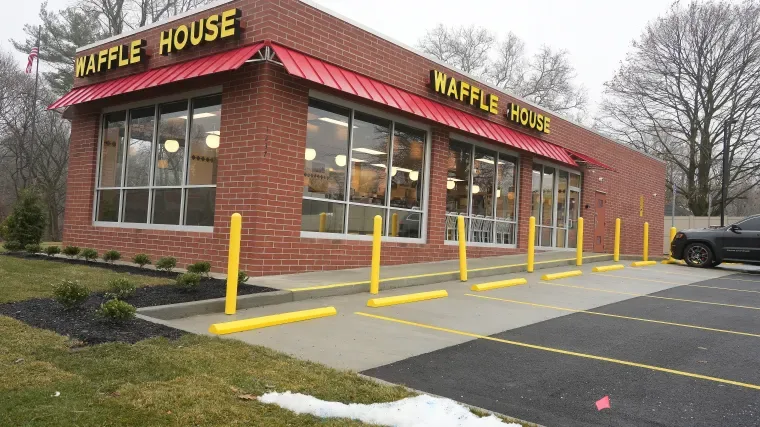
One World Cup fan avoided the tourist attractions to experience quintessential America, choosing Waffle House at 2am over Times Square, Chili’s for NBA Finals over Broadway shows. The German supporter’s Tennessee-to-Houston road trip reads like an anthropological field study that puts FIFA’s cultural programming to shame.
This matters because the 2026 tournament represents football’s most ambitious cultural experiment since the World Cup went global. Three nations, 16 cities, and a viewing audience that largely thinks “football” involves helmets and end zones. Yet instead of embracing America’s beautifully weird contradictions — 24-hour diners where hash browns cost less than stadium beer, chain restaurants that somehow become communal living rooms — FIFA has defaulted to sanitised fan zones and corporate hospitality suites.
The German’s itinerary reads like Roy & HG describing Middle America: sticky vinyl booths, fluorescent lighting, and the democratic genius of places where truckers, shift workers, and now World Cup tourists share the same conversation about whether Mbappe can deliver against elite defending.
What FIFA’s Missing About American Football Culture
Here’s the uncomfortable truth FIFA won’t acknowledge: American sports culture already perfected what football tourism pretends to offer. The Super Bowl doesn’t succeed because of exclusive experiences — it works because every sports bar, chain restaurant, and community centre becomes a temporary stadium.
The German fan stumbled onto this accidentally. Waffle House isn’t a tourist destination; it’s where America happens at 3am. Chili’s isn’t authentic dining; it’s where middle America watches sport together without pretending it’s high culture. These spaces don’t exist for visitors — they exist despite them.
FIFA’s cultural consultants should be taking notes instead of designing fan festivals that feel like airport terminals with bunting. The real test of 2026 won’t be whether Brazil or Portugal advance from their groups — it’ll be whether football can infiltrate American spaces that don’t know they’re hosting a cultural exchange.
Beyond the Tourist Trap Industrial Complex
The German’s journey exposes sport tourism’s fundamental dishonesty. We sell “authentic experiences” that are anything but, packaging culture into digestible chunks that offend nobody and transform nothing. Meanwhile, a random encounter at a highway Chili’s during Game 6 of the NBA Finals probably taught this fan more about American sport psychology than any official FIFA cultural program could manage.
This isn’t romantic nostalgia for “real” America versus corporate tourism. It’s recognition that the World Cup’s power lies in its ability to make the ordinary extraordinary. When 32 nations converge on spaces designed for local convenience rather than global consumption, something genuinely transformative becomes possible.
The 2026 World Cup will succeed or fail based on whether it embraces this chaos or fights it. FIFA can keep selling overpriced packages to fans who want their cultural exchange pre-approved and Instagram-ready. But the smart money — metaphorically speaking, since the best Australian online casinos won’t be taking bets on Waffle House interactions — is on the supporters who understand that America’s greatest export isn’t its tourist attractions.
It’s its ability to make strangers feel temporarily at home while remaining completely, unapologetically itself.
VS — Chief sports columnist, australiafootball.com
Related coverage
See live World Cup 2026 odds for the latest market movement.
Compare AU sportsbooks on our World Cup betting sites guide.
 Best Betting Sites
 Best Online Casinos
 Blackjack Sites
 Online Pokies
 Fast Payout Casinos
 PayID Casinos
 New Casinos 2026