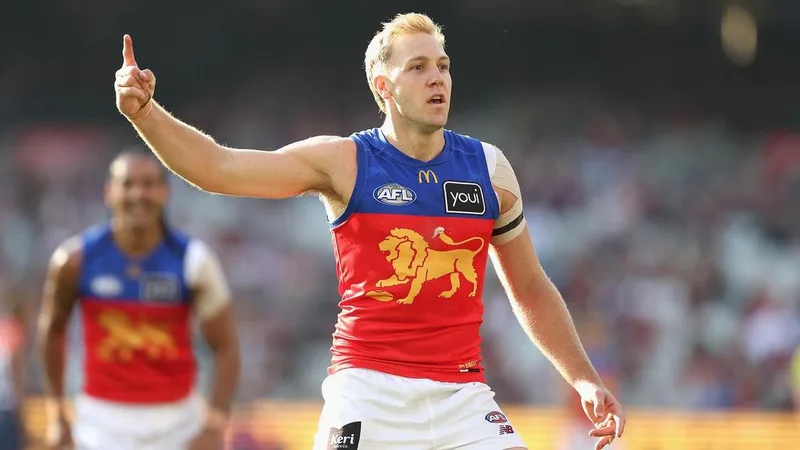
The Brisbane Lions are winning, they’re roaring, and their coach is staring down one of the most uncomfortable problems in football: what do you do when a quality player comes back fit and your team hasn’t missed him?
The Luxury Problem Nobody Wants to Talk About
Chris Fagan is tossing up whether to recall experienced forward Oscar Allen from a long-term injury back into his winning AFL side, and the commentary class has largely treated this as a feel-good story about a player’s comeback. It isn’t. It’s a genuine selection headache, and the way Fagan resolves it will tell us something important about how this Lions group is really functioning.
Here’s the thing about winning sides: they are self-sustaining ecosystems. Every player in the 22 has found rhythm, role clarity, and trust. You introduce a returning forward — even a good one, even one with Allen’s pedigree — and you’re not just adding a body. You’re displacing someone whose form currently justifies their spot, you’re reshuffling the forward rotation that has been clicking, and you’re asking a bloke who has been out long-term to immediately match the intensity of teammates who have been at it week after week. The AFL is not a sport that rewards sentiment on selection night.
This is not a knock on Allen. It’s a knock on the lazy assumption that quality players automatically improve quality teams the moment they pull on the boots again.
What the History of “Fit-Again Stars” Actually Tells Us
The cautionary tales are plentiful. The AFL is littered with examples of coaches bowing to the pressure — from fans, from media, from the returning player’s own obvious value — and shoehorning someone back in before the team was ready to absorb them. It rarely works cleanly. Sometimes it takes weeks for the reintegrated player to genuinely fire, and in that window, the machine can lose a gear it needed.
Fagan is one of the more analytically rigorous coaches in the competition. He didn’t build Brisbane into a premiership contender by making decisions that play well at press conferences. If Allen is recalled, it should be because Fagan’s data and his football staff have identified a specific matchup or forward-structure problem that Allen solves — not because it’s good for optics.
The broader AFL conversation around fitness and return-to-play timelines has shifted significantly. Clubs are more sophisticated now. The days of rushed returns driven by finals panic are — mostly — behind the better-run organisations. Brisbane, to their credit, is one of those better-run organisations. Which makes this worth watching precisely because Fagan is unlikely to get it wrong.
| Factor | Favours Recall | Favours Delay |
|---|---|---|
| Allen’s experience | ✓ Class in finals pressure | — Match fitness unknown |
| Current forward form | — Someone loses their spot | ✓ Don’t fix what’s working |
| Season timing | ✓ Finals window approaching | — Disruption risk is higher now |
| Long-term injury context | — Rust is real | ✓ More NEAFL games available |
What This Selection Signals Beyond Football
Selection debates like this one are the canary in the coal mine for how a club actually operates — whether the coach has genuine autonomy or whether he’s managing upward pressure from board rooms and sponsor boxes. At a club like Brisbane, where Harris Andrews has anchored the defence and the culture has been deliberately rebuilt over half a decade, Fagan will know better than anyone that the integrity of his selection process is itself a cultural asset.
Mess it up once — rush someone back for the wrong reasons — and the players notice. Every time.
So yes, watch whether Oscar Allen plays. But more importantly, watch how he plays and who made way. That’s where you’ll find the real story about what kind of September this Lions side is capable of having.
VS — Chief sports columnist, australiafootball.com
 Best Betting Sites
 Best Online Casinos
 Blackjack Sites
 Online Pokies
 Fast Payout Casinos
 PayID Casinos
 New Casinos 2026