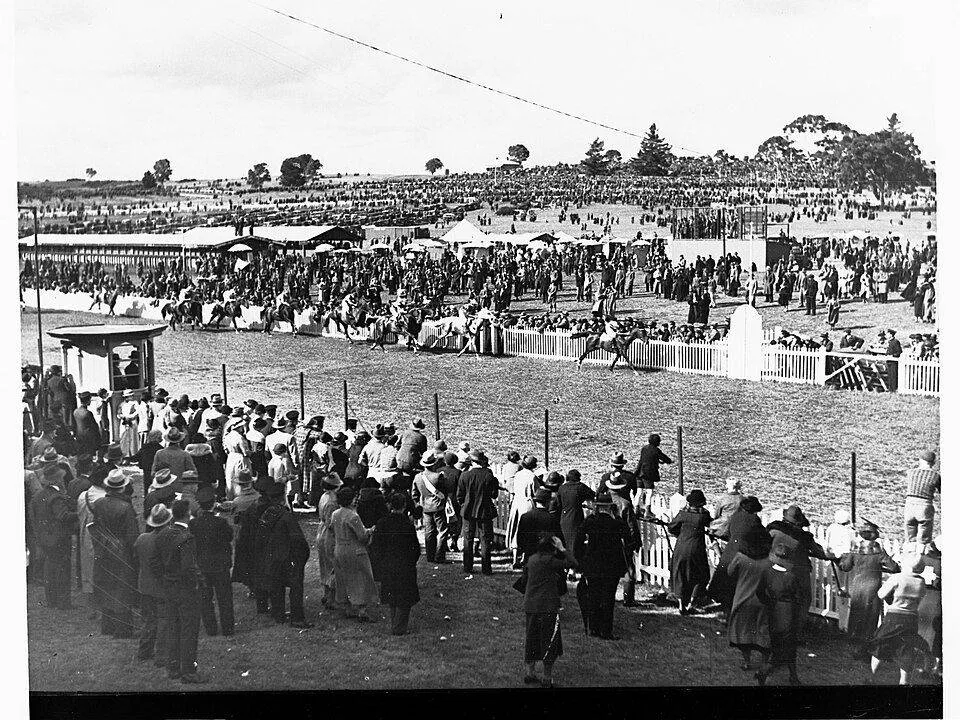
New to Australian horse racing? Here is everything you need to know.
Australian thoroughbred racing is one of the nation’s oldest and most popular sports. For newcomers, it can seem like an impenetrable world of form guides, barrier draws, and track conditions. This guide breaks it all down — whether you are heading to your first race meeting or just want to understand what the fuss is about when Melbourne Cup day arrives.
How Horse Racing Works
The basics. Thoroughbred racehorses compete over a set distance on turf or synthetic tracks, ridden by professional jockeys and prepared by licensed trainers. Races are categorised by distance (sprints 1,000-1,200m, middle-distance 1,400-2,000m, staying races 2,400m and beyond), by type (handicap, weight-for-age, set weights), and by quality (maiden races through to elite Group 1 level).
Group 1 races are the pinnacle — equivalent to a Grand Final or Grand Slam. Group 2 and Group 3 follow, then Listed races and open handicaps. The classification system ensures horses compete against similar ability. Competitive, compelling racing at every level.
The Racing Calendar
Racing runs year-round in Australia, but the season revolves around three major carnival periods:
Melbourne Spring Racing Carnival (September-November): The pinnacle. Melbourne Cup, Cox Plate, Caulfield Cup, VRC Derby, Victoria Oaks. Cup Week at Flemington — Derby Day, Melbourne Cup Day, Oaks Day, Stakes Day — ranks among the biggest events on Australia’s sporting and social calendar.
Sydney Autumn Racing Carnival (March-April): Centred at Royal Randwick and Rosehill Gardens. The Championships showcase the Queen Elizabeth Stakes, Doncaster Mile, TJ Smith Stakes, and the Golden Slipper for two-year-olds.
Brisbane Winter Racing Carnival (May-June): Eagle Farm and Doomben. The Stradbroke Handicap, Doomben Cup, and Queensland Oaks headline the final major carnival before the cycle starts again.
Key Races Every Fan Should Know
| Race | Distance | Track | When | Why It Matters |
|---|---|---|---|---|
| Melbourne Cup | 3,200m | Flemington | November | Australia’s most famous race — “the race that stops a nation” |
| Cox Plate | 2,040m | Moonee Valley | October | The weight-for-age championship for the best horse in training |
| The Everest | 1,200m | Randwick | October | World’s richest turf race at $20 million |
| Golden Slipper | 1,200m | Rosehill | March | World’s richest race for two-year-olds |
| Caulfield Cup | 2,400m | Caulfield | October | Premier handicap and Melbourne Cup lead-up |
| Queen Elizabeth Stakes | 2,000m | Randwick | April | Weight-for-age feature of Sydney’s autumn carnival |
| Doncaster Mile | 1,600m | Randwick | April | One of Australia’s most prestigious handicap races |
Understanding Betting
Betting is integral to the Australian racing experience. Here is what you need to know:
Win and Place: The simplest bet. Win pays if your horse finishes first. Place pays if it finishes in the top three (top two in fields of seven or fewer).
Each Way: A win and place bet combined. Horse wins — you collect both dividends. Runs second or third — you collect only the place dividend.
Exotics: More complex. Exacta (first and second in order), Trifecta (first three in order), Quinella (first two in any order), First Four (first four in order). Bigger payouts, harder to land.
Odds: Australian racing uses decimal odds. A horse paying $5.00 to win — a $10 bet returns $50 (stake multiplied by odds). The favourite has the shortest odds. The market considers it most likely to win.
Tote vs Fixed Odds: Tote pools all bets and distributes dividends from the final pool. Fixed odds lock in your price at bet placement. Tote can be better for longshots. Fixed odds give certainty. If you are just getting started, it pays to racing odds at top Australian bookmakers before placing your first wager.
Carnival Culture
Australian racing carnivals are social events as much as sporting contests. Melbourne Cup Day is a public holiday in metropolitan Melbourne. Fashions on the field, hospitality marquees, electric atmosphere — an experience unlike anything else in Australian sport. A day at the races typically involves:
- Fashion: Dressing up is tradition. Derby Day (black and white), Oaks Day (florals). Fashions on the Field competitions at every carnival celebrate style and creativity.
- Food and Drink: Picnic hampers on the lawns to champagne in corporate marquees. Eating and drinking well is part of the raceday fabric.
- Social Atmosphere: Seasoned punters alongside first-timers, some having a punt on the races and others spinning through online pokies in Australia between events. All walks of life, one shared spectacle.
- The Sweep: Office sweeps for the Melbourne Cup are a national tradition. Names drawn from a hat, each person follows their horse through the race.
How to Follow the Sport
Television: Sky Racing broadcasts every meeting live. Free-to-air networks carry the major carnival race days — Channel 7 and Channel 10 have featured races during carnival periods.
Online: Racing.com, Punters.com.au, and state racing body websites provide form guides, tips, replays, and live streaming. The Racing.com app lets you watch live and bet directly.
At the Track: Nothing replaces attending in person. Metropolitan tracks like Flemington, Randwick, Caulfield, Rosehill, and Eagle Farm offer world-class facilities. Country racing delivers a more relaxed atmosphere and genuine community feel.
Form Guide: Learning to read a form guide takes time. Start with the basics: recent results, race distance, weight carried, jockey and trainer, and track condition (firm through to heavy). Focus on recent form and the trainer-jockey combination first. Build from there.
Getting Started
The best way to fall in love with Australian racing is to experience it. Attend a metropolitan or country meeting. Watch the Melbourne Cup carnival on television. Follow a favourite trainer or jockey through a season. The blend of athleticism, strategy, tradition, and spectacle is unlike anything else in Australian sport. Once you understand the basics, it offers entertainment, excitement, and community year-round.
LF — Breaking news correspondent, australiafootball.com
 Best Betting Sites
 Best Online Casinos
 Blackjack Sites
 Online Pokies
 Fast Payout Casinos
 PayID Casinos
 New Casinos 2026