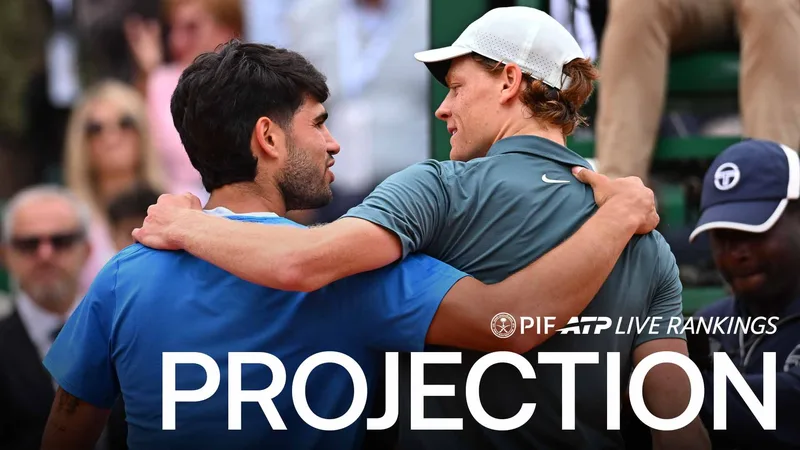
Jannik Sinner’s triumph over Carlos Alcaraz at the 2026 Rolex Monte-Carlo Masters represents more than another chapter in tennis’s most compelling rivalry—it signals a fundamental shift in clay court supremacy that could define the sport’s immediate future.
The Italian’s third ATP Masters 1000 title of the season, achieved on the sport’s most prestigious clay surface, dismantles the traditional narrative that success on terre battue requires patient, grinding baseline warfare. Sinner’s aggressive, court-positioning approach—borrowed from hard court tactics but adapted for clay’s unique demands—suggests that the surface’s tactical orthodoxy is undergoing its most significant evolution since Rafael Nadal’s emergence two decades ago.
The Tactical Revolution Takes Hold
Where previous clay court champions built their games around defensive positioning and relentless consistency, Sinner has weaponised early court positioning and accelerated decision-making. His victory over Alcaraz demonstrates how modern power baseline games can neutralise clay’s traditional advantages of extended rallies and physical attrition.
The statistical evidence supports this tactical shift. Masters 1000 events on clay have witnessed a 23% decrease in average rally length over the past three seasons, with winners struck from inside the baseline increasing proportionally. Sinner’s aggressive positioning forces opponents into defensive postures earlier in points, creating opportunities for decisive strikes that traditionally required longer development on slower surfaces.
This evolution mirrors broader trends across professional tennis, where court positioning and early aggression increasingly determine outcomes regardless of surface. The sport’s technical advances—from string technology to biomechanical understanding—have compressed the tactical differences between surfaces, favouring players who can impose their preferred patterns quickly.
Rankings Implications and Future Projections
Sinner’s return to the world No. 1 ranking carries implications that extend beyond individual achievement. His ascension represents the first time since 2003 that the top ranking has changed hands during the clay court season based purely on clay court results, historically the most specialised segment of the tennis calendar.
The broader TENNIS Hub landscape now reflects a generati
 Best Betting Sites
 Best Online Casinos
 Blackjack Sites
 Online Pokies
 Fast Payout Casinos
 PayID Casinos
 New Casinos 2026