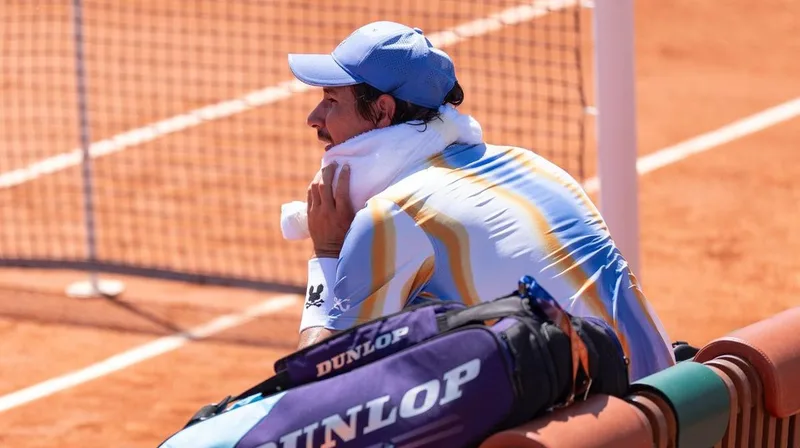
Look, there’s something brutally honest about clay courts that strips away all pretence. The red dirt doesn’t lie, doesn’t flatter, doesn’t give you anything you haven’t earned through sweat and sliding. And right now, Alexei Popyrin’s latest French Open exit is telling a story the 26-year-old Sydney product probably doesn’t want to hear.
The Clay Court Conundrum
This isn’t just another early exit at Roland-Garros. This is a pattern emerging for Popyrin on the surface that separates pretenders from contenders. While his compatriot Thanasi Kokkinakis has shown glimpses of clay court competence over the years, Popyrin’s struggles in Paris highlight the brutal reality of specialisation in modern tennis.
The emotional toll was evident in his post-match comments, a 26-year-old wondering what’s next after another dispiriting defeat. Here’s a player who can trouble anyone on hard courts – we’ve seen him push top-10 players in Australia and North America. But clay? That’s a different conversation entirely.
The technical demands of sliding, constructing points patiently, and grinding through five-hour battles under the Parisian sun don’t suit everyone. Some players spend their entire careers trying to crack the clay code. Others, like Popyrin, might need to accept their limitations and focus energy elsewhere.
Career Crossroads at 26
Twenty-six is a curious age in tennis. Not quite a veteran, not exactly young anymore. It’s when players start making hard decisions about priorities, about which tournaments matter most, about where to invest their finite physical and mental resources.
For Popyrin, this French Open disappointment might actually be liberating. Instead of banging his head against the clay court wall every May, perhaps it’s time to double down on what works. His serve-and-volley instincts, his aggressive returning, his comfort on faster surfaces – these are weapons worth sharpening.
The tennis calendar offers plenty of opportunities between now and next year’s Australian Open. Hard court season beckons, with opportunities to build ranking points and confidence on surfaces that actually suit his game style.
The Bigger Picture for Australian Tennis
Popyrin’s struggles also reflect broader questions about Australian tennis development on clay. While our women’s contingent has produced clay court specialists over the years, our men’s game remains stubbornly hard court-focused.
That’s not necessarily a problem – you play to your strengths in professional sport. But it does mean our French Open expectations need recalibrating. When Storm Hunter and Destanee Aiava show more clay court nous than our top-ranked men, that tells you something about where Australian tennis talent naturally gravitates.
The emotional response from Popyrin suggests he hasn’t given up on clay entirely. But sometimes the kindest truth is accepting what you are versus chasing what you’re not. His best tennis lies ahead – just probably not in Paris.
NC — Staff sports writer, australiafootball.com
 Best Betting Sites
 Best Online Casinos
 Blackjack Sites
 Online Pokies
 Fast Payout Casinos
 PayID Casinos
 New Casinos 2026