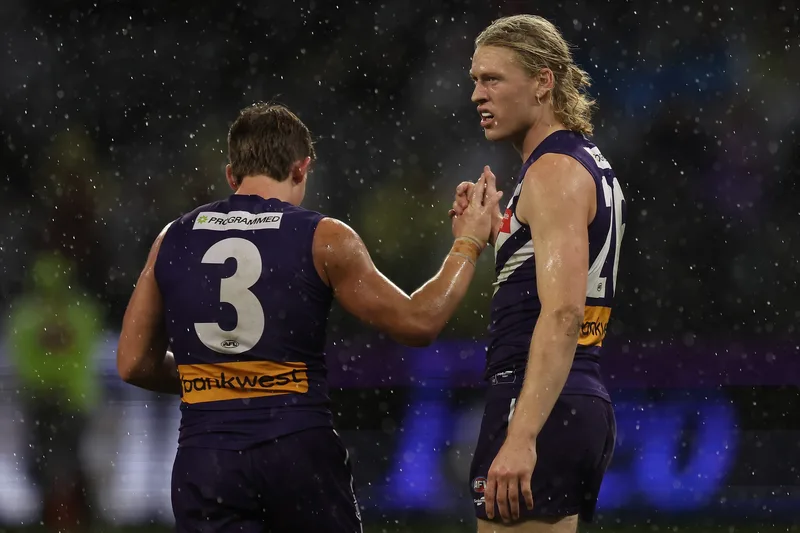
Justin Longmuir’s decision to take a conservative path with several important players coming back from injury reveals a coach who understands the difference between September success and August heroics. While Hayden Young’s imminent return provides a welcome boost, Fremantle’s cautious approach with their broader injury list demonstrates the kind of strategic thinking that separates genuine contenders from pretenders.
The September Chess Game
The temptation to rush premium talent back for crucial late-season matches has derailed more finals campaigns than any tactical mishap. Longmuir’s measured approach recognises that a 75% fit superstar in week one of finals is infinitely more valuable than a 90% version who breaks down in a do-or-die preliminary final.
This isn’t revolutionary thinking, but it’s surprisingly rare in practice. Too often coaches succumb to external pressure — from supporters, media, and sometimes their own desperation — to field their strongest possible side immediately. The Dockers appear immune to such panic, suggesting a club culture that prioritises substance over symbolism.
Young’s return timing reflects this philosophy perfectly. The dynamic defender has been among Fremantle’s most consistent performers when fit, and his ball-use from half-back provides the precise distribution that unlocks their attacking patterns. But rather than forcing him through a premature comeback that risks setback, the coaching staff are allowing his body to dictate the timeline.
Building Depth Through Necessity
Fremantle’s conservative injury management has created an unexpected benefit: genuine depth testing under pressure. Players who might otherwise warm the pine have been forced to step up, creating internal competition that strengthens the entire list. This isn’t just about discovering hidden gems — it’s about building the kind of squad resilience that defines successful September campaigns.
The AFL landscape is littered with teams who relied too heavily on their top-tier talent, only to watch their season crumble when injuries inevitably struck. Fremantle’s approach suggests they’ve learned from these cautionary tales, developing systems and rotations that function regardless of personnel.
This philosophy extends beyond individual player management to broader squad rotation. Rather than burning out key contributors in meaningless late-season fixtures, Longmuir can afford to rest players strategically, entering finals with a fresher, more resilient group.
The Competitive Advantage Hidden in Plain Sight
While rivals gamble on rushed comebacks and short-term fixes, Fremantle’s patience creates a competitive advantage that won’t show up in highlight reels but could prove decisive when stakes are highest. Their approach demonstrates confidence in both their depth and their tactical flexibility — two qualities that become essential when finals intensity exposes every weakness.
The real test of this strategy won’t come in the remaining home-and-away rounds. It will arrive in September, when Fremantle’s methodical approach either validates their patience or exposes the risks of playing it safe. Based on Longmuir’s track record of building sustainable success rather than chasing quick fixes, the smart money suggests their conservative approach will prove its worth when it matters most.
VS — Chief sports columnist, australiafootball.com
 Best Betting Sites
 Best Online Casinos
 Blackjack Sites
 Online Pokies
 Fast Payout Casinos
 PayID Casinos
 New Casinos 2026