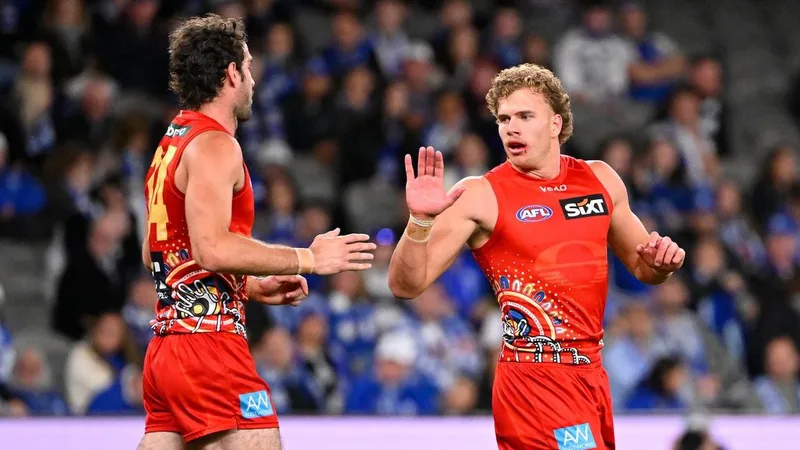
Damien Hardwick’s confession that Gold Coast must “pay the price” to retain their key forwards strips away the pretense surrounding expansion club football. This isn’t about building culture or developing players anymore — it’s about buying loyalty in a market that treats the Gold Coast Suns as a developmental nursery for Melbourne’s big clubs.
The Premium Tax on Paradise
The brutal economics of Gold Coast’s position demand acknowledgment: they’re not competing on equal terms, despite what the AFL’s equalisation rhetoric suggests. When Hardwick admits his club must overpay to retain talent, he’s articulating what every expansion club coach knows but rarely states so bluntly.
This isn’t merely about market forces or cost-of-living differentials. The Suns face a psychological premium that no salary cap adjustment addresses — the perception that playing on the Gold Coast represents career purgatory rather than opportunity. Melbourne’s football media reinforces this narrative weekly, treating every Suns win as an upset and every loss as validation of the expansion experiment’s failure.
The irony cuts deep when you consider that players like Ben King and his fellow key forwards represent exactly the type of tall timber that clubs like Geelong Cats and Sydney Swans would mortgage their futures to acquire. Yet Gold Coast must essentially bribe them to stay in paradise while battling whispers about “wasted careers” and “development opportunities elsewhere.”
The Salary Cap Charade
Hardwick’s admission exposes the fundamental dishonesty in how the AFL discusses salary cap equality. The theoretical ceiling remains identical across all 18 clubs, but the practical reality of recruitment reveals vast disparities in purchasing power. A dollar spent at Collingwood or Richmond carries cultural capital that a dollar spent at Gold Coast simply cannot match.
This creates a vicious cycle where the Suns must allocate disproportionate resources to retain players who might accept significantly less to join Melbourne powerhouses. The result? Less money available for depth, coaching staff, and infrastructure improvements that might actually build the sustainable culture everyone claims to want.
The AFL’s response has been predictably bureaucratic — cost-of-living allowances that tinker around the edges while ignoring the core issue. You cannot regulate away geographic preference or cultural bias through accounting adjustments. The fundamental problem remains: expansion clubs are forced to overpay for the privilege of competing in a competition designed to favour its founding members.
The Real Test of AFL Equalisation
Gold Coast’s retention dilemma represents the ultimate test of whether the AFL’s equalisation measures actually work or merely provide the illusion of competitive balance. If the Suns lose their key forwards despite offering premium contracts, it confirms what many suspect: the competition remains rigged in favour of traditional football states and established clubs.
The betting markets understand this reality better than the AFL’s spin doctors. Victorian clubs consistently receive shorter odds for landing out-of-contract talent, regardless of the expansion clubs’ superior list positions or salary cap space.
Hardwick’s honesty about “paying the price” should be celebrated, not because it represents good strategy, but because it forces recognition of the structural inequalities that the AFL refuses to address. Until the competition acknowledges that location disadvantage requires more than cosmetic salary cap tweaks, expansion clubs will continue operating as expensive feeder systems for Melbourne’s entertainment.
The Suns’ retention battle isn’t just about keeping two forwards — it’s about whether expansion club football can survive as anything more than an elaborate recruitment exercise for traditional powers.
VS — Chief sports columnist, australiafootball.com
 Best Betting Sites
 Best Online Casinos
 Blackjack Sites
 Online Pokies
 Fast Payout Casinos
 PayID Casinos
 New Casinos 2026