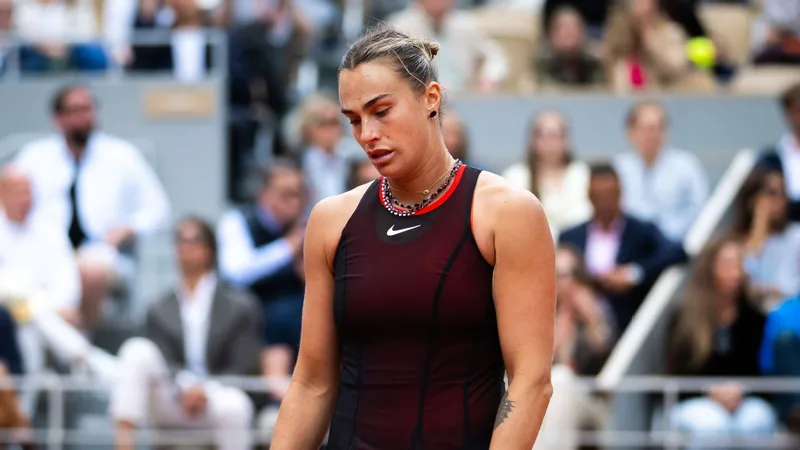
The women’s French Open draw exploded into chaos Wednesday when top seed Aryna Sabalenka crashed out in stunning fashion, leaving Roland-Garros without a clear favourite for the first time in years. What should have been a coronation march for the world No. 1 instead became a cautionary tale about clay court volatility — and a golden opportunity for the rest of the field.
This wasn’t supposed to happen. Sabalenka had arrived in Paris as the overwhelming favourite, riding a wave of hard-court dominance that made her seem unstoppable. But clay has always been tennis’s great leveller, the surface where rankings mean less than rhythm, where power can be neutralised by patience, where champions are made and broken by the finest margins.
The Contenders Circle
With Sabalenka gone, the TENNIS Hub suddenly looks wide open in ways we haven’t seen at a major in months. Elena Rybakina emerges as the most logical beneficiary — her flat, penetrating groundstrokes and imposing serve translate better to clay than many realise. The Kazakhstani has the game to punish anyone who gives her short balls, and crucially, she won’t be intimidated by the moment.
But don’t sleep on the dark horses. This is precisely the kind of scenario where a clay court specialist can emerge from the shadows. The surface rewards patience, court craft, and the ability to construct points — qualities that don’t always correlate with WTA rankings but can prove decisive when the pressure mounts.
Where Sabalenka Went Wrong
The autopsy of Sabalenka’s defeat reveals uncomfortable truths about modern power tennis on clay. Her aggressive baseline game, so dominant on hard courts, became a liability when Diana Shnaider refused to be bullied into submission. Every attempt to blast through the Russian was met with dogged defensive work that turned aggression into self-destruction.
Clay rewards strategic thinking over raw power, and Sabalenka’s tactical inflexibility ultimately cost her. She couldn’t adjust her game plan mid-match, couldn’t find alternative routes to victory when Plan A crumbled. It’s a reminder that even world No. 1s can be tactically one-dimensional when stripped of their preferred conditions.
The New Reality
What this means for the remaining draw is simple: chaos breeds opportunity. Without Sabalenka’s intimidating presence lurking in the top half, players who might have written off their chances will suddenly believe again. The psychological shift is enormous — instead of playing to avoid the inevitable meeting with the world No. 1, everyone can genuinely envision themselves holding the Coupe Suzanne Lenglen.
This is exactly the kind of unpredictability that makes Roland-Garros special. While Wimbledon rewards grass court purity and the US Open celebrates power, the French Open has always been tennis’s most democratic major — the place where underdogs can genuinely threaten the establishment if they’re willing to grind long enough.
The question now isn’t who was supposed to win, but who wants it most. In a wide-open draw, hunger often trumps rankings. Someone will emerge from this chaos as champion, and they’ll do it the hard way — exactly as it should be on clay.
VS — Chief sports columnist, australiafootball.com
 Best Betting Sites
 Best Online Casinos
 Blackjack Sites
 Online Pokies
 Fast Payout Casinos
 PayID Casinos
 New Casinos 2026