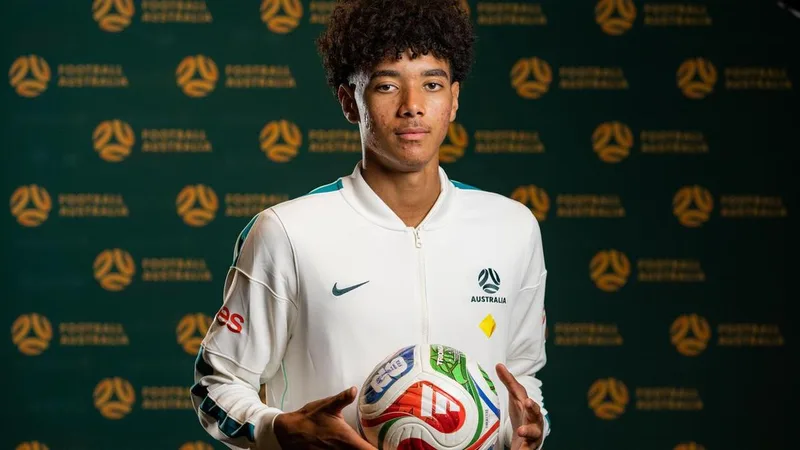
Tony Popovic’s most defining decision as Socceroos coach might not be who he picks, but who he doesn’t. Apart from stalwart Harry Souttar, the coach has turned to a youthful defence to anchor Australia’s 2026 World Cup campaign — a calculated gamble that exposes just how threadbare our defensive depth has become.
The Great Generational Shift
This isn’t just squad rotation; it’s a philosophical overhaul that would make even Graham Arnold blush. Where his predecessor tinkered around the edges, Popovic has taken a sledgehammer to convention. The SOCCEROOS Hub tells the story in stark numbers — we’re banking on defenders who were still learning their trade when Qatar 2022 kicked off.
Souttar remains the lone survivor of Australia’s defensive establishment, a 6’6” monument to continuity in a landscape of uncertainty. Around him, Popovic is constructing a backline that prioritises potential over proven pedigree. It’s either inspired forward planning or reckless abandon — and we won’t know which until the first ball is kicked in anger.
The timing couldn’t be more precarious. Australia enters this World Cup cycle without the luxury of a golden generation’s twilight years to ease the transition. Instead, we’re throwing our youngsters into the deep end of international football’s most unforgiving arena.
Risk Versus Reward Mathematics
Youth brings pace, adaptability, and fewer bad habits inherited from previous coaching regimes. But it also brings inexperience at the exact moment when steady nerves matter most. World Cups don’t forgive learning curves, and opposition scouts will already be circling these defensive newcomers like sharks sensing blood.
Consider the alternative scenarios Popovic rejected. He could have persisted with aging veterans, hoping their guile would compensate for declining athleticism. Instead, he’s chosen to trust that raw talent, properly coached, can withstand the pressure cooker of tournament football. It’s the kind of decision that either makes careers or ends them.
The psychological burden on Souttar intensifies exponentially. He’s no longer just a centre-back; he’s become the defensive unit’s emotional anchor, expected to mentor while maintaining his own standards. That’s a lot to ask of any player, regardless of his Premier League credentials.
World Cup Reality Check
This defensive reconstruction arrives at the worst possible moment for experimentation. The 2026 World Cup expanded format means more games, more pressure, and more opportunities for inexperienced defenders to crack under scrutiny. Tournament football strips away the safety nets that domestic leagues provide.
Popovic’s faith in youth isn’t born from choice but necessity. Australia’s defensive conveyor belt hasn’t exactly been overflowing with world-class talent, forcing his hand toward players who might need another two years to reach their peak. The question becomes whether they can accelerate that development curve when the stakes couldn’t be higher.
The broader implications extend beyond this tournament cycle. If these young defenders succeed, they’ll form the foundation of Australian football for the next decade. If they fail spectacularly, it sets back the program’s development and exposes the poverty of our defensive production line.
Popovic’s defensive revolution represents Australian football at its most vulnerable — caught between an aging generation’s decline and a new one’s uncertain promise. Success validates his vision; failure leaves us scrambling for answers when we can least afford to find them.
VS — Chief sports columnist, australiafootball.com
 Best Betting Sites
 Best Online Casinos
 Blackjack Sites
 Online Pokies
 Fast Payout Casinos
 PayID Casinos
 New Casinos 2026