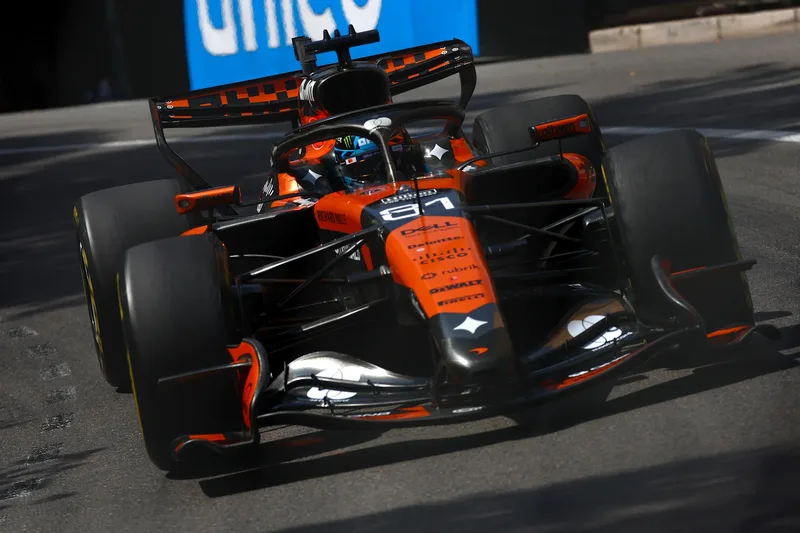
Monaco strips away everything F1 stands for — raw speed, massive downforce, DRS zones that matter. What’s left is a glorified street fight where the very specific demands of Monte Carlo allowed several teams to devise weird and wonderful looking additional winglets that would look ridiculous anywhere else on the calendar.
Maximum Downforce, Minimum Drag
The streets of Monte Carlo demand a completely different aerodynamic philosophy. Where tracks like Monza or Spa reward slippery bodywork and minimal downforce, Monaco is the opposite extreme. Teams can bolt on every piece of additional downforce they’ve got because straight-line speed barely matters when you’re threading through Casino Square at 80km/h.
McLaren and Ferrari led the charge with the most aggressive winglet packages, understanding that Monaco rewards mechanical grip and aerodynamic stability over anything resembling top speed. The result? Cars that looked like they’d been assembled from spare parts, but generated the kind of downforce that lets drivers attack the Fairmont Hairpin with confidence.
The Aussie Angle
For Oscar Piastri, these Monaco-specific modifications represent a crucial learning curve. Street circuits have always been the great leveller in F1 — where car performance matters less than pure racecraft. Piastri’s performance in Monaco this season showed exactly why McLaren invested so heavily in their unique aerodynamic package for the principality.
Meanwhile, Jack Doohan at Alpine will be watching these technical solutions closely as he prepares for his full-season debut. Understanding how teams adapt their cars for Monaco’s unique demands is fundamental knowledge for any F1 driver, especially one coming from the junior categories where such extreme aerodynamic modifications aren’t available.
Barcelona Next Stop
The beauty of F1’s technical regulations is watching teams completely transform their cars from one weekend to the next. Those wild winglets that dominated Monaco headlines? They’ll be stripped off faster than a pit stop for the Barcelona-Catalunya GP in three days. The Spanish circuit demands completely different aerodynamic priorities — longer straights, high-speed corners, and conventional racing lines that reward efficiency over maximum downforce.
Teams are already back to their wind tunnels, designing packages that will work at Circuit de Barcelona-Catalunya. Where Monaco was about bolting on every piece of additional downforce available, Barcelona demands balance between straight-line speed and cornering performance.
RD — Motorsport & combat sports writer, australiafootball.com
 Best Betting Sites
 Best Online Casinos
 Blackjack Sites
 Online Pokies
 Fast Payout Casinos
 PayID Casinos
 New Casinos 2026