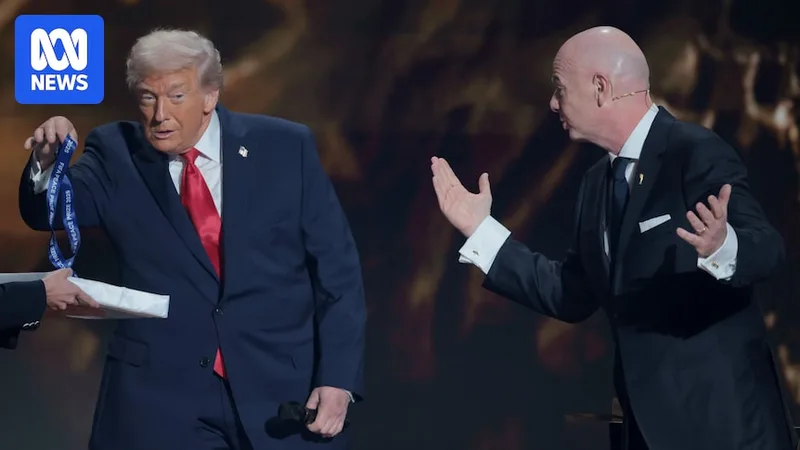
The beautiful game has never been uglier. Three days before Australia kicks off against Türkiye in Vancouver, the 2026 World Cup is drowning in political controversy that makes Qatar’s human rights issues look like a gentle diplomatic spat.
When Politics Kicks Football
The rollercoaster of controversies that plagued the build-up to this World Cup has reached fever pitch. British MPs are calling for boycotts over Donald Trump’s latest inflammatory rhetoric, while the tournament’s North American hosts grapple with a president whose Twitter feed reads like a diplomatic disaster waiting to happen.
This isn’t just about football anymore. When politicians across three countries are trading barbs about who should or shouldn’t attend the world’s biggest sporting event, we’ve crossed from sport into something far more dangerous. The irony is brutal: a tournament designed to unite nations through football has become the latest proxy war for geopolitical posturing.
Omar Artan’s story perfectly encapsulates the madness. Set to become the first Somalian referee to officiate at a World Cup finals, his appointment should have been a celebration of football’s global reach. Instead, his selection became another political football when he received a hero’s welcome on his return to Somalia — a moment that somehow got tangled up in the broader diplomatic mess surrounding this tournament.
The Corporate Giants vs Independent Spirit
Behind the political theatrics lies a more insidious problem: the corporate stranglehold on football’s biggest stage. The same dynamic that’s played out in Australian sport — where broadcast rights wars determine which fans can actually watch their teams — has gone global with devastating effect.
Independent bookmakers are fighting back with agility and niche expertise against corporate giants, but this tournament has exposed how thoroughly commercialised interests have captured FIFA’s decision-making. When ticket prices are sky-high and access is restricted to corporate hospitality suites, football stops being the people’s game and becomes another luxury commodity.
The beautiful game’s soul is being carved up between political opportunists and corporate profiteers, while actual football fans — the ones who’ll pack WORLD-CUP Hub forums discussing whether Japan can upset the odds or if Spain will finally deliver on their talent — are treated as afterthoughts in their own sport.
What This Means for Football’s Future
The 2026 World Cup has become a cautionary tale about what happens when sport becomes too important to leave to sporting bodies. FIFA’s inability to keep politics out of football has created a tournament where the biggest stories aren’t about Mbappé’s form or tactical innovations, but about which government officials will show up to opening ceremonies.
For Australian fans watching the Socceroos take on Türkiye in three days, this political circus serves as a stark reminder of why we need sport to remain sport. The moment football becomes a vehicle for diplomatic point-scoring, everyone loses — especially the fans who just want to watch their team compete on the world’s biggest stage.
The beautiful game deserves better than this ugly political theater. But until FIFA grows a spine and remembers that football belongs to its fans, not its sponsors or political allies, we’ll keep getting World Cups that feel more like diplomatic summits than sporting celebrations.
VS — Chief sports columnist, australiafootball.com
Related coverage
See live World Cup 2026 odds for the latest market movement.
Compare AU sportsbooks on our World Cup betting sites guide.
 Best Betting Sites
 Best Online Casinos
 Blackjack Sites
 Online Pokies
 Fast Payout Casinos
 PayID Casinos
 New Casinos 2026