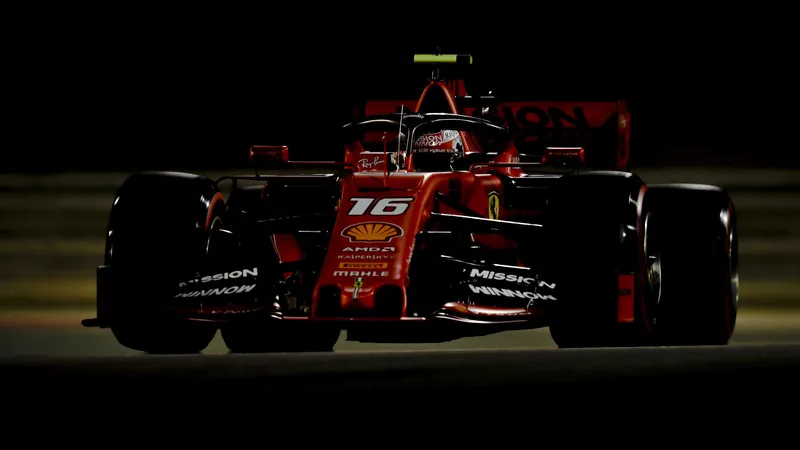
There is an old wisdom in Formula 1 that says the team who leads on Friday is rarely the team who leads on Sunday. It is a generalisation, naturally, and not always true. But for Ferrari at Albert Park, Friday’s two practice sessions offered a cautionary illustration of why the sport punishes complacency.
In FP1, Charles Leclerc and Lewis Hamilton delivered a commanding one-two. A 1:20.267 for Leclerc, Hamilton less than half a second behind. The SF-26 looked imperious through the fast corners, and the early narrative wrote itself: Ferrari were the team to beat.
By the end of FP2, that narrative had been quietly dismantled.
The Numbers Tell the Story
Hamilton finished fourth in FP2, 0.321 seconds behind Oscar Piastri’s McLaren. Respectable in isolation. But Leclerc’s fifth — 0.562 seconds off the pace — was the figure that would have concerned the Ferrari strategists most. The driver who had been untouchable four hours earlier was now being outpaced by both Mercedes drivers as well.
The swing from session to session was significant. In FP1, Leclerc held a half-second advantage over George Russell’s Mercedes in seventh. In FP2, Russell was three-tenths quicker than Leclerc. That is a reversal of nearly eight-tenths between the two sessions — far too large to attribute to driver error or tyre variation alone.
What Changed?
The most probable explanation lies in track conditions. FP1 took place in the relative cool of Friday morning at Albert Park, with track temperatures in the low twenties. By FP2, the afternoon sun had raised the surface temperature considerably, altering the balance between mechanical and aerodynamic grip.
If the SF-26 is a car that thrives in cooler conditions, that presents an interesting dynamic for the weekend. Qualifying at 16:00 AEDT on Saturday will see similar temperatures to FP2, not FP1. The race on Sunday afternoon will be warmer still.
Ferrari’s engineers will have spent Friday evening dissecting every data point, searching for the setup adjustments that might recover their morning advantage. Leclerc, at least, remained positive: “It was a positive start to the weekend. FP1 was solid,” he told F1.com after the sessions. Hamilton echoed the measured optimism: “It’s been a really good day. It’s great to be back on track.” Neither driver publicly acknowledged the FP2 slide — a telling omission. This is precisely the challenge that defines a competitive F1 team: not simply being fast, but being fast in all conditions.
Hamilton’s Adjustment Period
For Hamilton, the Friday fade adds another layer of complexity to what was already a significant transition. His first competitive weekend in a Ferrari — after seven World Championships with Mercedes — was always going to involve a period of calibration. Reading a new car’s behaviour, understanding its limits, trusting the feedback from unfamiliar engineers.
Seventh-tenths quicker than Leclerc in FP2 was encouraging on the surface. But Hamilton will know that the absolute pace, not the inter-team comparison, is what matters when the lights go out on Sunday. And the absolute pace was not where Ferrari expected it to be.
The Broader Picture
Ferrari’s FP1 performance was not an illusion. The car has genuine speed, and Leclerc’s opening lap demonstrated a driver at the peak of his abilities in a machine that suited his aggressive style. The question is whether that speed can be replicated when the conditions shift.
Max Verstappen in the Red Bull was sixth in FP2, also grappling with similar questions — compounded by a stall in the pit lane and floor damage from an oversteer moment at turn ten. The established order from Friday morning had been reshuffled: McLaren and Mercedes ascendant, Ferrari and Red Bull searching for answers.
Saturday would provide them. Or it would deepen the questions. In Formula 1, the space between those two outcomes is measured in hundredths of a second.
AF — australiafootball.com
 Best Betting Sites
 Best Online Casinos
 Blackjack Sites
 Online Pokies
 Fast Payout Casinos
 PayID Casinos
 New Casinos 2026