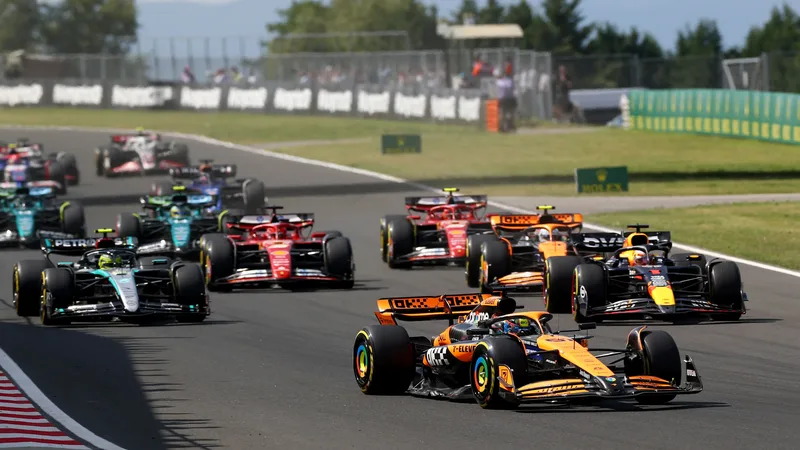
A zero on the scoreboard does not always tell the full story. Oscar Piastri left Albert Park without points, but anyone who watched the Melbourne weekend closely knows the raw speed was there — and that matters more than the result suggests.
The question every Australian motorsport fan is asking this week is simple: can Piastri genuinely challenge for the 2026 world championship? The evidence from the opening round, DNF and all, points firmly towards yes.
The Pace Was Real
Strip away the race-day heartbreak and focus on the sessions where Piastri had clean air and a functioning car. His FP2 benchmark of 1:19.729 was more than two-tenths clear of Kimi Antonelli’s Mercedes. His qualifying sectors showed improvements in the high-speed corners that had troubled McLaren during pre-season testing in Bahrain.
Against the established order, that pace translates into genuine threat. Neither Charles Leclerc nor Lewis Hamilton in the Ferrari SF-26 demonstrated a clear advantage over Piastri when conditions were equal. George Russell’s Mercedes looked rapid through the quick sections but appeared to struggle with rear tyre degradation in the longer runs — a weakness Piastri has historically exploited.
Then there is Max Verstappen. The four-time champion’s qualifying crash grabbed headlines on Saturday, but the bigger story was Red Bull’s underlying pace deficit. The RB22 lacked the straight-line speed to match McLaren through Albert Park’s long blasts.
Where Piastri Has the Edge
Three areas separate Piastri from most of his rivals heading into the 2026 campaign. First, his tyre management under the new regulations has been exceptional. The 2026 compounds behave differently to their predecessors, and early indications suggest the McLaren driver has adapted faster than most.
Second, his qualifying pace has taken another step forward. The gap to teammate Lando Norris in single-lap trim at Melbourne was marginal, but the trajectory over recent seasons shows Piastri is closing what was once a notable deficit. In a championship where grid position matters more than ever — DRS effectiveness is reduced under the new aero rules — that improvement is significant.
Third, and perhaps most critically for Australian fans, Piastri has developed the mental resilience that separates good drivers from great ones. His post-Melbourne response, by all accounts from within the McLaren camp, was immediate and constructive. No dwelling, no excuses. Just forensic analysis of what went wrong and how to ensure it does not happen again.
The Rivalry That Will Define the Season
Piastri’s championship push will ultimately be measured against three or four drivers. Norris, as his teammate, provides the daily benchmark. Leclerc in the Ferrari represents the car most likely to challenge for outright supremacy. And Verstappen, despite Red Bull’s early struggles, can never be discounted.
The cancelled Middle East races may actually benefit Piastri. The compressed schedule reduces opportunities for mechanical failures to derail his campaign, and the European circuits that dominate the revised calendar reward the smooth, precise driving style that has become his signature.
Those checking Australian online betting markets will notice Piastri’s championship odds remain longer than his pace deserves. That disconnect between the bookmakers’ numbers and the stopwatch data is the kind of value that tends to correct sharply once results start matching the underlying performance.
What Melbourne Really Told Us
Albert Park confirmed that the F1 Hub title picture for 2026 is wide open. Four teams showed front-running pace, and Piastri was as fast as anyone when the car cooperated.
The DNF hurt. Championships, though, are won across twenty-plus weekends, not defined by one painful Sunday in March. Piastri has the car, the team, and increasingly the complete skill set to mount a serious challenge.
Australia’s wait for an F1 world champion has lasted since the sport’s inception. On Melbourne’s speed data, that wait might just have an end date.
FC — australiafootball.com
 Best Betting Sites
 Best Online Casinos
 Blackjack Sites
 Online Pokies
 Fast Payout Casinos
 PayID Casinos
 New Casinos 2026