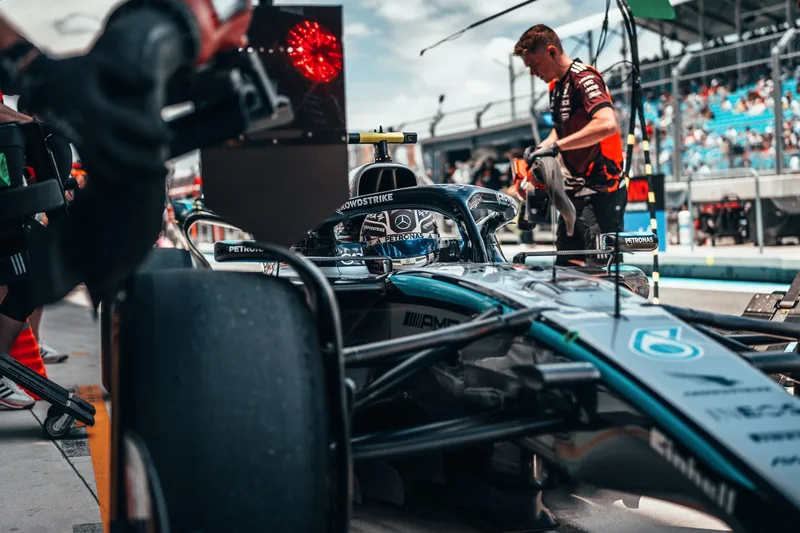
Formula 1 returns from its spring hiatus with teams converging on Miami for the season’s fourth round, where Pirelli’s tyre compound selection could prove decisive in reshaping the championship narrative through the unique Sprint weekend format.
Strategic Implications of Compound Choice
The Hard Rock Stadium circuit’s abrasive surface and high-speed characteristics demand precise compound selection. Teams must balance peak performance across three competitive sessions — Sprint Qualifying, Sprint, and the Grand Prix itself. Unlike traditional weekends, the compressed timeframe leaves minimal room for setup adjustments between sessions.
The allocation typically favours harder compounds on Miami’s demanding layout, where track temperatures frequently exceed 40 degrees Celsius. This thermal challenge becomes particularly acute for teams like Ferrari and Mercedes, whose recent struggles with tyre management have cost crucial championship points.
Championship leader Charles Leclerc enters Miami with a 12-point advantage, but his Ferrari’s inconsistent tyre degradation patterns could prove problematic if Pirelli opts for softer compounds. Conversely, Red Bull Racing’s superior tyre management might provide the platform for a counter-attack.
Sprint Format Adds Complexity Layer
The Sprint weekend format amplifies every strategic decision. Teams receive reduced practice time to understand compound behaviour, making Pirelli’s choice even more influential. The medium compound typically serves as the primary race tyre, but Miami’s unique characteristics could force a deviation from this standard approach.
Historical data suggests harder compounds favour consistent performers over pure pace merchants. McLaren’s recent resurgence could benefit significantly if Pirelli selects compounds that reward mechanical sympathy over outright speed. Their drivers have demonstrated exceptional tyre management skills throughout the season’s opening rounds.
Weather variables add another dimension. Miami’s notorious afternoon thunderstorms could force wet-weather preparations, though teams cannot adjust tyre allocations based on forecast changes. The strat
 Best Betting Sites
 Best Online Casinos
 Blackjack Sites
 Online Pokies
 Fast Payout Casinos
 PayID Casinos
 New Casinos 2026