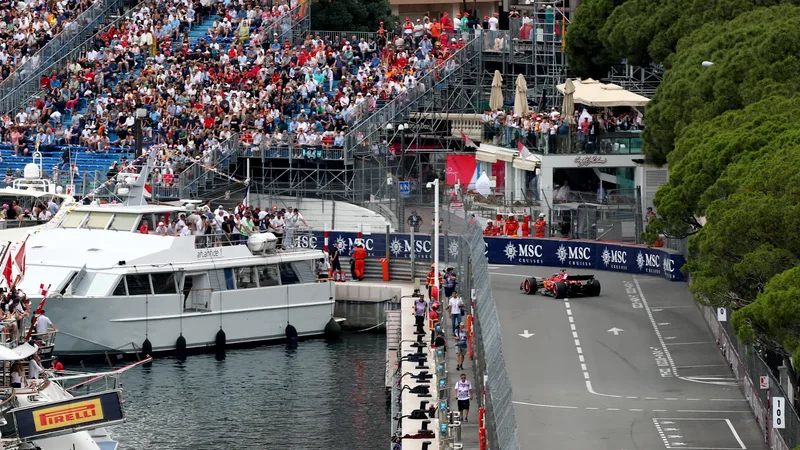
Look, there’s no race quite like Monaco. The glitz, the glamour, the fact that one wrong move sends you into the harbour barriers at 200km/h. With the Monaco GP 2026 just four days away, every punter worth their salt needs to understand what makes Monte Carlo tick differently to every other circuit on the calendar.
Why Saturday Matters More Than Sunday
Here’s the thing about Monaco — qualifying isn’t just important, it’s absolutely everything. The circuit’s notorious for being impossible to overtake on, which means your grid position on Saturday afternoon essentially determines your Sunday fate. When you’re backing a driver for the weekend, you’re really backing their one-lap pace on Saturday.
McLaren learned this the hard way last season when Oscar Piastri had the race pace to challenge but started P8 after a botched qualifying session. Meanwhile, drivers who nail their Saturday sessions can hold position even when the quicker cars are breathing down their necks.
The smart money always follows the qualifying specialists here. Those marginal gains in sector times become race-defining advantages when overtaking opportunities are virtually non-existent.
Monaco’s Weather Wild Card
Monte Carlo sits in a microclimate that can shift faster than a Red Bull Racing pit stop. One minute you’re dealing with Mediterranean sunshine, the next you’re watching million-dollar machines aquaplaning into the Sainte Devote barriers.
Weather windows are everything in Monaco. A surprise shower during qualifying can completely flip the grid order, promoting drivers who happened to get their flying laps in before the drops started falling. Keep your weather app handy — seriously. Those localised Monaco showers have created some of the most memorable upsets in F1 Hub history.
The track surface here doesn’t drain like purpose-built circuits either. When it rains, it stays wet for longer, creating extended periods where the racing line becomes a lottery.
The Tyre Strategy Minefield
Monaco chews through rubber differently than anywhere else. The constant acceleration and braking, combined with the circuit’s abrasive surface, creates tyre degradation patterns that can make or break race strategies.
Here’s what separates the experienced Monaco watchers from the weekend punters: understanding that the traditional strategy playbooks get thrown out the window. Teams often opt for longer first stints to avoid getting stuck behind slower traffic, even if it means running on degraded rubber.
| Strategy Element | Monaco Impact |
|---|---|
| Pit window timing | Critical for track position |
| Tyre compound choice | Harder compounds often favoured |
| Undercut opportunity | Limited due to traffic |
The teams that nail their Monaco strategy are usually the ones thinking three moves ahead, not just focusing on the immediate pit window.
Safety Car Certainties
Listen, if you’re not factoring in at least one safety car period during the Monaco GP, you’re not paying attention to history. The narrow barriers and close racing almost guarantee interventions, and those yellow flag periods can completely reshuffle the order.
Lewis Hamilton has made a career out of reading these situations perfectly, using safety car periods to jump positions that would be impossible to gain through pure racing. Smart operators know that Monaco races are often decided not by pure pace, but by how teams react when the safety car emerges.
The timing of these interventions is crucial for strategy calls. An early safety car can favour different compounds, while a late one might bunch up the field for a thrilling final stint.
NC — Staff sports writer, australiafootball.com
 Best Betting Sites
 Best Online Casinos
 Blackjack Sites
 Online Pokies
 Fast Payout Casinos
 PayID Casinos
 New Casinos 2026