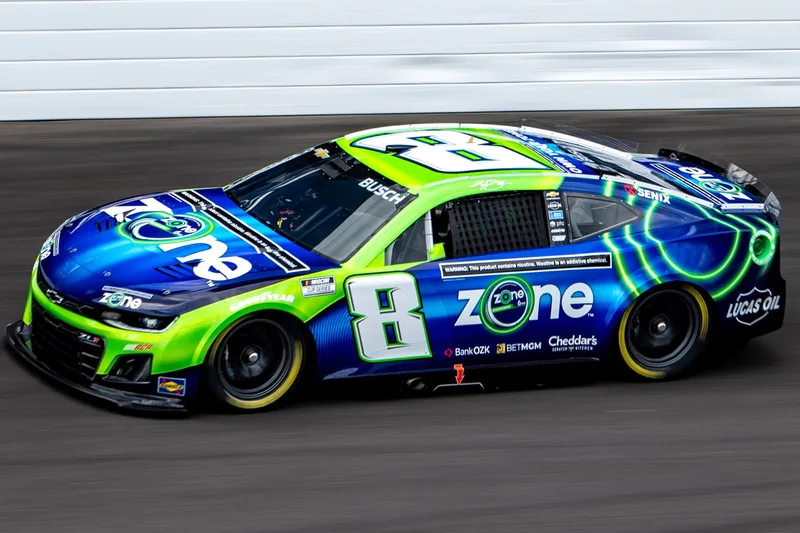
When Richard Childress Racing was set to announce Kyle Busch’s contract extension through 2027 but didn’t, it exposed everything wrong with NASCAR’s amateur-hour approach to business. Meanwhile, Formula 1 continues to demonstrate why it’s the gold standard for professional motorsport operations.
NASCAR’s Communication Breakdown
The revelation that a major contract announcement simply didn’t happen speaks to NASCAR’s fundamental problem: it operates like a regional series pretending to be a global sport. Team owners casually mention contract extensions that were “to be announced” as if deals are made over beers at the local track rather than in boardrooms with proper legal frameworks.
Compare this to Formula 1’s meticulous approach. When Ferrari or Red Bull Racing announce driver contracts, every detail is coordinated through multiple time zones, translated into dozens of languages, and timed to maximise global media impact. The announcement becomes an event itself, not an afterthought mentioned in passing months later.
This isn’t just about polish — it’s about treating motorsport as the billion-dollar industry it claims to be. NASCAR’s casual attitude toward major announcements reflects a broader lack of professionalism that keeps it confined to the American bubble while F1 conquers new markets from Miami to Singapore.
The Monaco Standard
With the Monaco GP happening today at Circuit de Monaco, the contrast becomes even starker. Monaco represents everything NASCAR isn’t: global prestige, corporate sophistication, and media savvy that treats every announcement as content gold. When Max Verstappen or Charles Leclerc sign contract extensions, the teams craft narratives that build driver brands and team identities simultaneously.
Kyle Busch’s non-announcement highlights NASCAR’s fundamental misunderstanding of modern sports marketing. In F1, driver contracts become storylines that fuel months of speculation, analysis, and fan engagement. Teams understand that the announcement is often more valuable than the signing itself — it’s content that drives social media engagement, broadcast discussions, and sponsor activation opportunities.
Professional Standards Matter
The broader implication extends beyond one botched announcement. NASCAR’s approach to major business decisions reflects an industry that hasn’t fully embraced its potential. While F1 teams coordinate with Liberty Media, broadcast partners, and global sponsors to time announcements for maximum impact, NASCAR teams apparently wing it.
This matters because motorsport success increasingly depends on narrative control. F1 has mastered the art of making every decision — from driver signings to regulation changes — feel like essential viewing. NASCAR’s casual approach to communication suggests an industry comfortable with mediocrity rather than hungry for global relevance.
The Kyle Busch contract saga isn’t just about one driver or one team — it’s a symptom of NASCAR’s broader challenge in competing with truly professional motorsport operations. While F1 sets the standard for how global sports should function, NASCAR continues to operate like it’s 1995, wondering why the world isn’t paying attention.
VS — Chief sports columnist, australiafootball.com
 Best Betting Sites
 Best Online Casinos
 Blackjack Sites
 Online Pokies
 Fast Payout Casinos
 PayID Casinos
 New Casinos 2026