Germany lead a group that, in all probability, will produce the Socceroos' Round of 32 opponent if Australia finish second in Group D — the realistic target under Tony Popovic. Ecuador and Côte d'Ivoire add South American steel and African pace, while Curaçao's appearance writes one of the tournament's most extraordinary underdog stories from a Caribbean island of just 150,000 people. Memories of Durban 2010, when Klose, Podolski, Müller and Özil dismantled the Socceroos 4-0, give Australian fans an unavoidable Germany angle to track here.





Group E — Winner Odds
| Team | Odds | Implied % |
|---|---|---|
 Germany Germany | 1.45 | 69.0% |
 Ecuador Ecuador | 4.80 | 20.8% |
 Ivory Coast Ivory Coast | 7.00 | 14.3% |
 Curacao Curacao | 46.00 | 2.2% |
Odds from major bookmakers as of 13 June 2026. Full odds breakdown
Group E Fixtures (AEST)
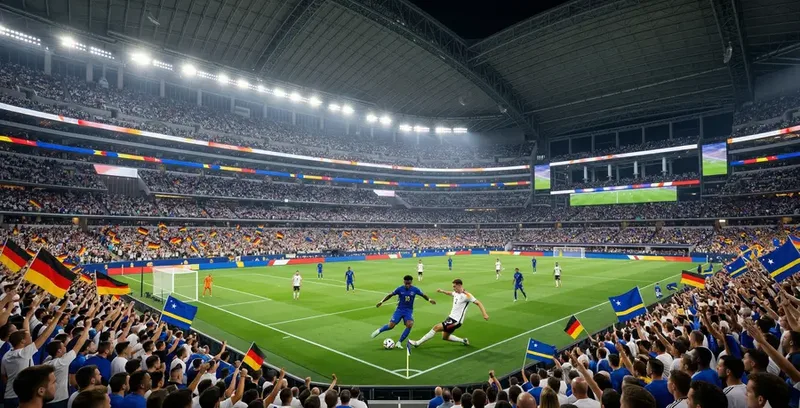 Germany vs Curacao
 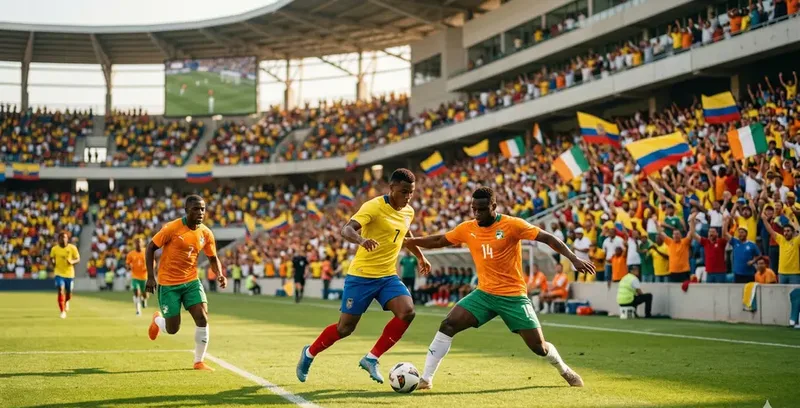 Ivory Coast vs Ecuador
 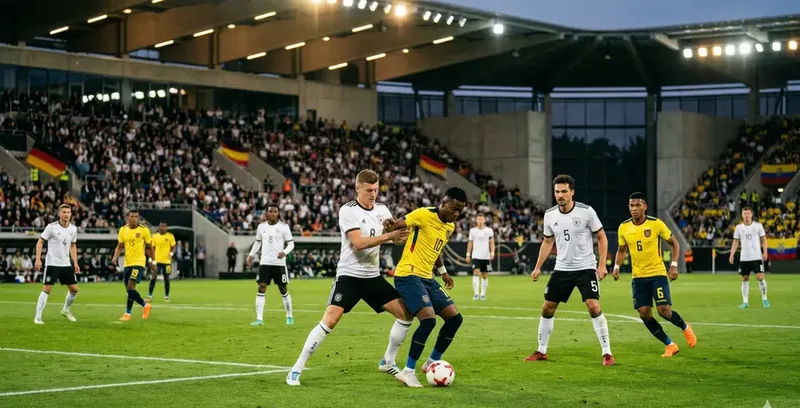 Germany vs Ivory Coast
 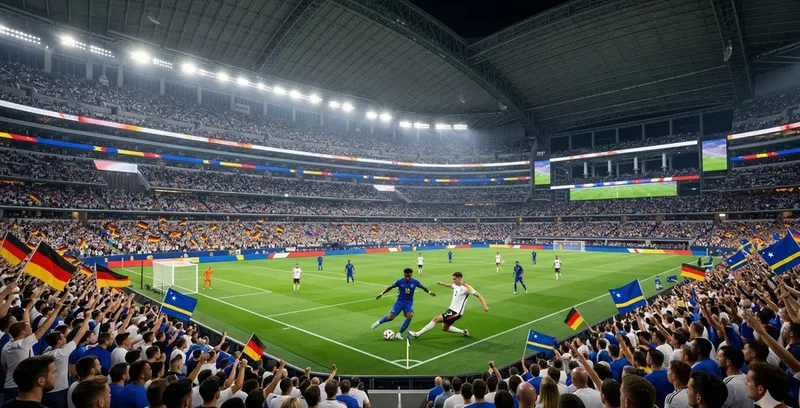 Ecuador vs Curacao
 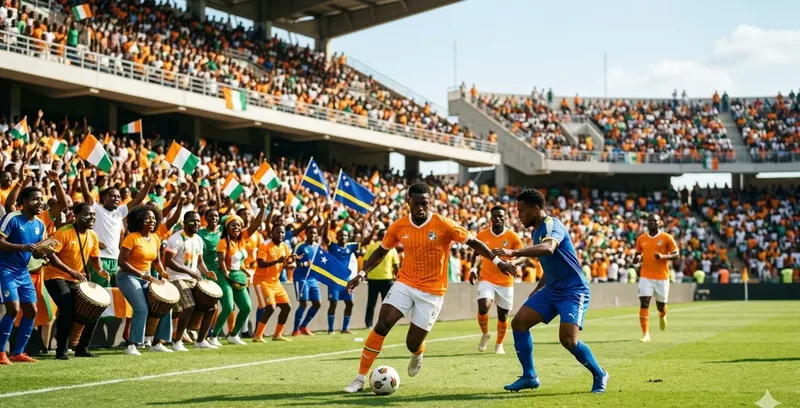 Curacao vs Ivory Coast
 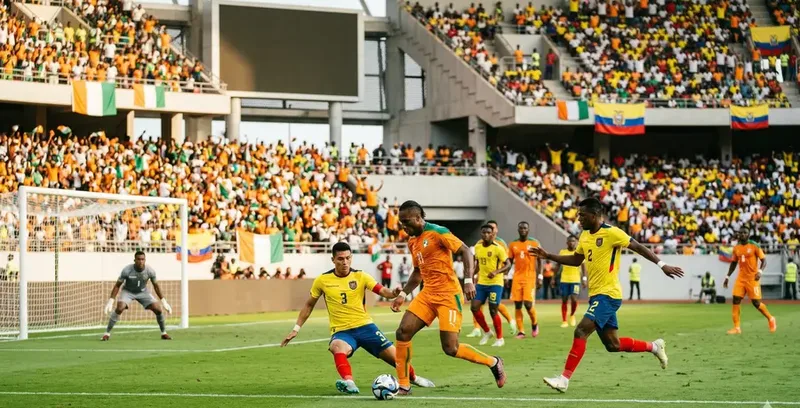 Ecuador vs Germany
 Why Group E Matters to Australia
For the Socceroos, Group E is not just another set of fixtures to monitor from a distance. It is the group most likely to produce their Round of 32 opponent. If Australia finish second in Group D — the realistic target under Tony Popovic — the knockout bracket pits them against the Group E winner. And the Group E winner, in all probability, will be Germany.
Australian fans of a certain vintage will remember the 2010 World Cup in South Africa, where the Socceroos were drawn against Germany in the group stage. The result was a 4-0 hammering in Durban — Miroslav Klose, Lukas Podolski, Thomas Mueller, and Mesut Ozil dismantling Pim Verbeek’s side with clinical efficiency. It remains one of the most chastening defeats in Socceroos history.
Sixteen years on, the landscape has shifted. Germany are no longer the impregnable force they once were. They crashed out in the group stage at both the 2018 and 2022 World Cups — results that would have been unthinkable during the Klose-Lahm era. But they remain formidable, and understanding this group is essential for any Australian supporter planning their knockout-round viewing schedule.
Germany — The Flawed Favourite
FIFA Ranking: 12 | Group winner odds: 1.45
Germany’s tournament odds tell you everything about their expected dominance in Group E. At 1.45 to win the group, the market considers failure almost unthinkable. Yet recent World Cup history suggests that “unthinkable” and “Germany” have developed an uncomfortable relationship.
The 2022 Qatar debacle — eliminated in the group stage after a loss to Japan and a draw with Spain — was supposed to be the nadir. Julian Nagelsmann was brought in to rebuild, and rebuild he has. Euro 2024 on home soil delivered a quarter-final performance that reminded the football world what Germany are capable of: fluid attacking play, a high press built on technical midfielders, and the kind of depth that only a nation with 80 million people and the Bundesliga’s academy system can produce.
Jamal Musiala is the centrepiece. The Bayern Munich attacker has evolved from a teenage prodigy into one of the most complete attacking midfielders in world football. His ability to receive between the lines, beat a defender one-on-one, and either finish or create makes him the kind of player who defines tournaments. Florian Wirtz provides a creative foil from deeper positions, while Kai Havertz has matured into a reliable number nine capable of leading the line at the highest level.
The defence, though, remains the question mark. Germany have struggled to replace the generation of Mats Hummels and Jerome Boateng with a centre-back pairing of comparable authority. Antonio Ruediger brings Champions League pedigree, but the partnership beside him has rotated throughout qualifying. Against Ecuador’s directness and Ivory Coast’s pace, that defensive uncertainty could be tested.
Australian relevance: If the Socceroos reach the Round of 32 as Group D runners-up, Germany are the most likely opponent. Popovic will be studying every minute of Group E footage. Germany’s defensive vulnerability — particularly against fast transitions — is precisely where Australia’s counter-attacking approach could cause damage. The 2010 scoreline need not repeat itself.
Ecuador — South American Steel
FIFA Ranking: 33 | Group winner odds: 4.80
Ecuador are the group’s most credible challenger to Germany. CONMEBOL qualifying is the hardest path to a World Cup in world football — eighteen matches across two years, played at sea level in Buenos Aires and at 2,850 metres altitude in Quito, against teams featuring the best players on the planet. Ecuador navigated that gauntlet to earn their spot, and they did so without relying on a single superstar.
What Ecuador bring instead is collective intensity. Moises Caicedo, the Chelsea midfielder, is one of the best ball-winners in the Premier League. His reading of the game, combined with an ability to distribute quickly after winning possession, makes him the engine room around which Ecuador’s entire system operates. If Caicedo plays well, Ecuador are dangerous. If opponents neutralise him, Ecuador lose their rhythm.
In attack, Ecuador are direct and physical. Enner Valencia may no longer carry the explosive pace of his 2014 World Cup breakout, but his tournament experience — eight World Cup goals across three tournaments — is invaluable. The younger forwards, including Brighton’s Jeremy Sarmiento and the emerging Kendry Paez, provide the speed and unpredictability that complement Valencia’s aerial presence.
Ecuador’s weakness is consistency. They can beat Argentina in Quito and lose to Venezuela a week later. The altitude advantage that makes them formidable at home is stripped away at a World Cup held in North America, where matches are played at sea level in modern stadiums with full air conditioning. Without the thin air of the Estadio Olimpico Atahualpa, Ecuador must rely purely on technical ability and tactical discipline — and historically, that has not always been enough.
Australian relevance: If Germany stumble and Ecuador top the group, the Socceroos could face Caicedo and company in the Round of 32. Ecuador’s pressing intensity would test Australia’s ability to build from the back, but their defensive transitions leave gaps that the Socceroos’ pace on the break could exploit.
Ivory Coast — African Champions with a Point to Prove
FIFA Ranking: 39 | Group winner odds: 7.00
Ivory Coast arrive at the 2026 World Cup as the reigning Africa Cup of Nations champions, having won the tournament on home soil in early 2024 with a remarkable run that saw them come from the brink of elimination to lift the trophy. That campaign — which included a dramatic turnaround after finishing third in their group and needing a run of knockout victories to reach the final — demonstrated a resilience that will serve them well in the pressure cooker of a World Cup group stage.
The squad is built around a core of European-based professionals. Sebastien Haller, the striker who returned to elite football after overcoming testicular cancer, provides a powerful focal point in attack. His courage and determination have become emblematic of this Ivorian generation. Simon Adingra offers electric pace from wide positions, while Franck Kessie brings the kind of physical midfield presence that can disrupt any opponent’s passing game.
Ivory Coast’s tactical approach under their coaching setup tends to be pragmatic in big matches and expansive against weaker opposition — a sensible strategy for a group containing both Germany and Curacao. Expect them to sit deep and counter against Germany, then dominate possession against Curacao. The Ecuador match is the pivotal fixture, and it is likely to be the most competitive and tactitious contest in the group.
The concern for Les Elephants is squad depth. The first eleven can compete with anyone in this group, but injuries or suspensions could expose a drop-off in quality that Germany and Ecuador do not face. In a tournament with tight scheduling and three group matches in nine days, the ability to rotate without losing quality is a genuine advantage — and it is one Ivory Coast may lack.
Australian relevance: An unlikely scenario, but if Ivory Coast top the group, the Socceroos would face a side that thrives on physicality and pace — two attributes that could trouble Australia’s back line. The more likely scenario is that Ivory Coast contest the second-place spot, potentially setting up a third-place finish that still advances them to the Round of 32 through the expanded format.
Curacao — The Fairy Tale
FIFA Ranking: 88 | Group winner odds: 46.00
At 46.00 to win the group, Curacao are the longest shot in Group E by a considerable margin. But their presence at the 2026 FIFA World Cup is, in itself, one of the tournament’s most remarkable stories.
Curacao is a Caribbean island of fewer than 150,000 people — roughly the population of Geelong. Their football infrastructure is modest, their budget a fraction of what Germany spend on youth development alone, and their path to qualification ran through the CONCACAF system, where they had to overcome nations with far greater resources. That they are here at all is a testament to the determination of a small football community punching so far above its weight that the phrase barely captures it.
The squad is a blend of Dutch-based professionals — many of whom qualify through Curacao’s historical ties to the Netherlands — and players from leagues across the Americas. Juninho Bacuna, who has experience in the English Championship and Bundesliga, is the most recognisable name. His ability on the ball and set-piece quality give Curacao a genuine attacking threat from dead-ball situations.
Realistically, Curacao’s goal is to compete, not to qualify. A creditable performance against Ivory Coast, a spirited effort against Ecuador, and the unforgettable experience of facing Germany on the world stage — these are the victories that a nation of this size treasures. But football being football, a moment of magic, a refereeing decision, or a red card for an opponent could produce a result that nobody sees coming. The 2026 World Cup’s expanded format exists precisely to give nations like Curacao this chance.
Australian relevance: Minimal in direct terms — Curacao topping this group would require a miracle of biblical proportions. But their presence is a reminder that the expanded World Cup format creates pathways for smaller nations, and Australia — a country that once struggled to qualify through Oceania — should appreciate what that means for football’s global reach.
Group E Fixtures
| Match | Significance for the Socceroos |
|---|---|
| Germany vs Ivory Coast | Likely a Germany win. Sets the tone for group domination |
| Ecuador vs Curacao | Ecuador should collect three points here comfortably |
| Germany vs Ecuador | The group decider. A Germany win wraps up top spot early |
| Ivory Coast vs Curacao | Ivory Coast need maximum points; Curacao fight for their moment |
| Germany vs Curacao | Expected to be one-sided. Germany will want goal difference |
| Ecuador vs Ivory Coast | The match that decides second place — and possibly third-place advancement |
Prediction
| Pos | Team | Pts | Outcome |
|---|---|---|---|
| 1 | Germany | 9 | Advance as group winners |
| 2 | Ecuador | 6 | Advance as runners-up |
| 3 | Ivory Coast | 3 | Best third-place contender |
| 4 | Curacao | 0 | Eliminated |
Germany’s quality and experience should see them through with a perfect record. Ecuador have the CONMEBOL-hardened mentality to edge Ivory Coast for second place, though that fixture could go either way. Ivory Coast will fancy their chances of advancing as one of the best third-placed teams if they beat Curacao and keep the Ecuador match tight. Curacao will treasure every minute but are unlikely to take points from any of their three opponents.
For Australian supporters, the headline is straightforward: start preparing for Germany. If the Socceroos finish second in Group D, the Round of 32 will most likely pit Popovic’s side against Nagelsmann’s. The 2010 nightmare in Durban was a different era, a different team, and a different Germany. This time, the Socceroos have the tactical discipline and tournament savvy to make it a contest.
For those analysing the group markets, the World Cup 2026 odds page has the full breakdown of outright winner, Golden Boot, and group winner prices from major bookmakers. Those looking for a platform to follow the tournament can compare options in our Australian betting sites guide.
Australia Football’s World Cup 2026 coverage continues with group previews for all 12 groups. Follow the Socceroos’ journey on our World Cup hub.
 Best Betting Sites
 Best Online Casinos
 Blackjack Sites
 Online Pokies
 Fast Payout Casinos
 PayID Casinos
 New Casinos 2026