Defending champions Argentina arrive as the tournament's shortest-priced favourite at 1.34 to top the group, and the draw has done little to suggest an upset is coming. Austria are a solid European outfit, Algeria carry genuine North African pedigree, and Jordan represent one of the most remarkable qualifying stories of the entire tournament. For Australian supporters, this group carries unmistakable emotional weight: it was Argentina who ended the Socceroos' 2022 World Cup at Ahmad bin Ali Stadium, in a 2-1 Round of 16 defeat that remains one of Australian football's proudest nights despite the result.





Group J — Winner Odds
| Team | Odds | Implied % |
|---|---|---|
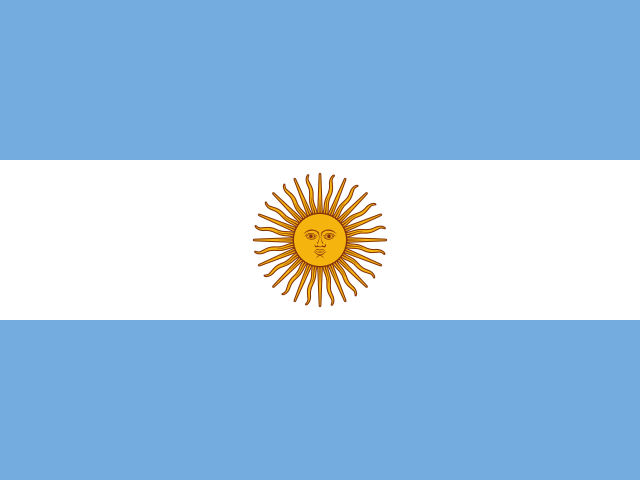 Argentina Argentina | 1.34 | 74.6% |
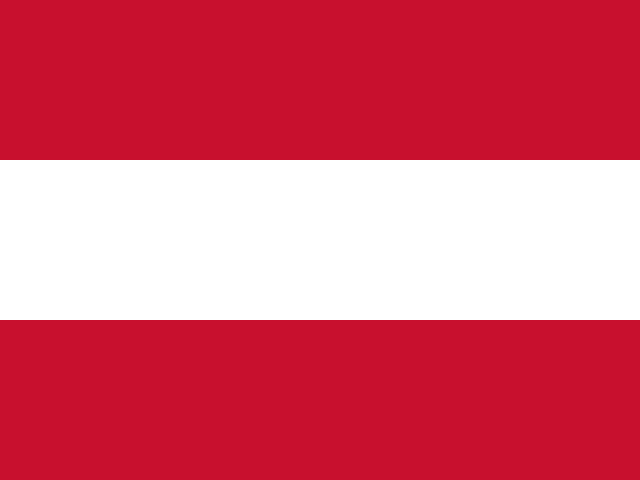 Austria Austria | 6.00 | 16.7% |
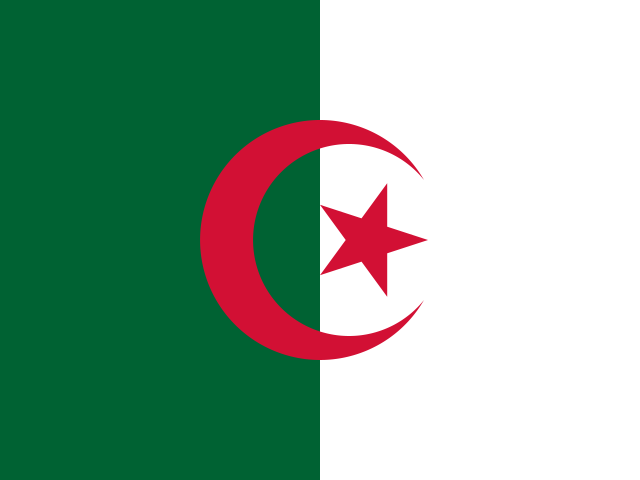 Algeria Algeria | 7.50 | 13.3% |
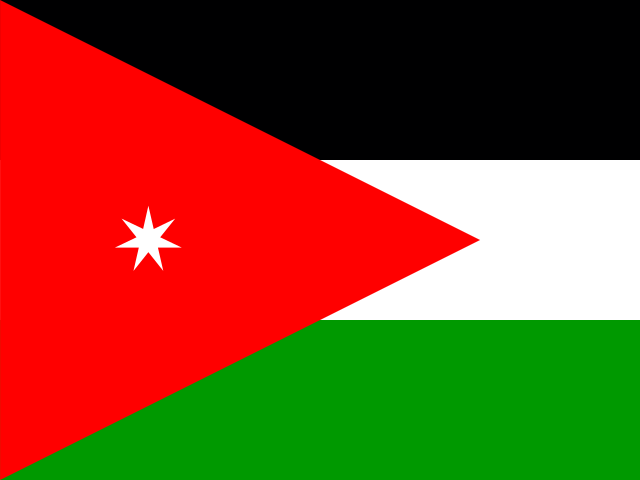 Jordan Jordan | 51.00 | 2.0% |
Odds from major bookmakers as of 13 June 2026. Full odds breakdown
Group J Fixtures (AEST)
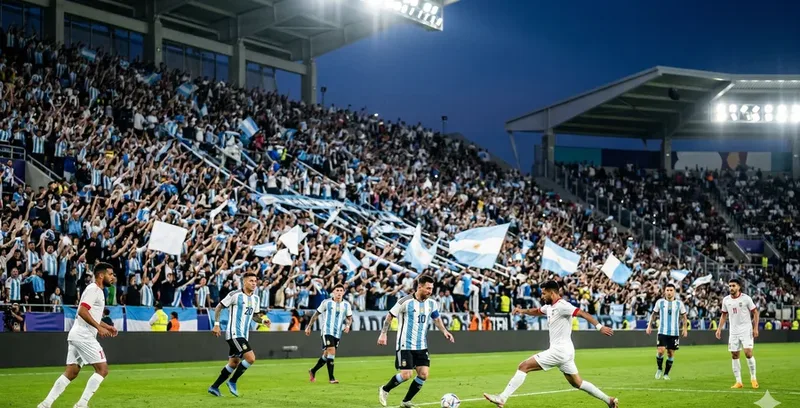 Argentina vs Algeria
 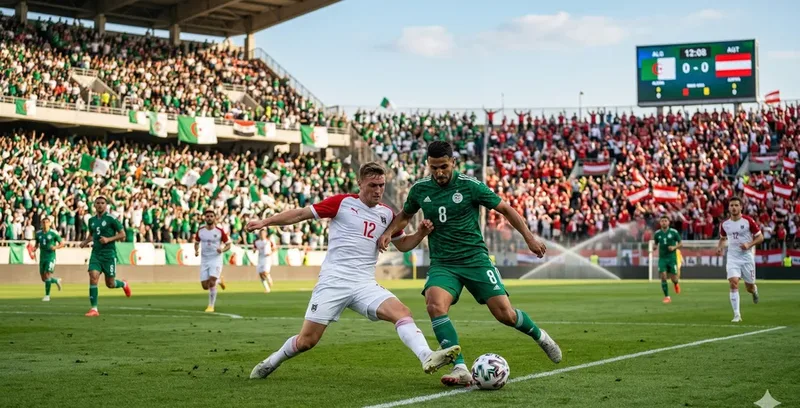 Austria vs Jordan
 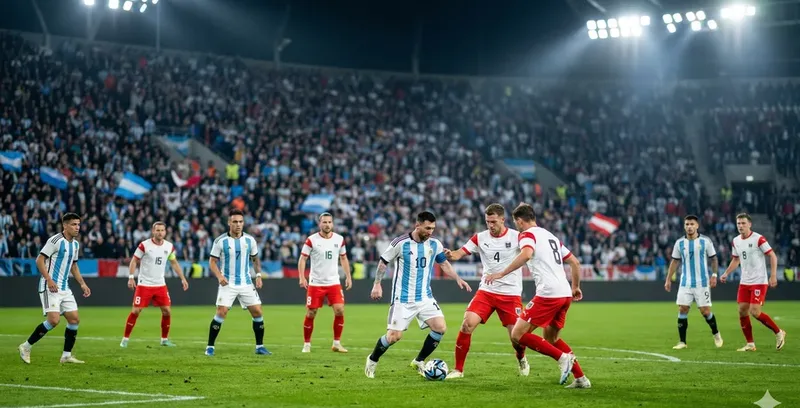 Argentina vs Austria
 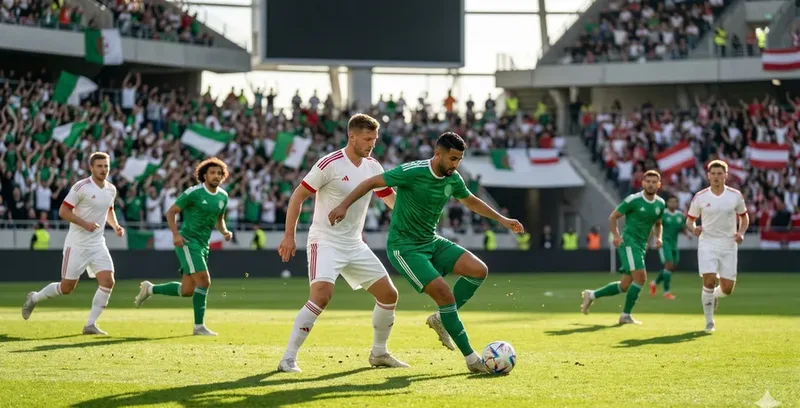 Jordan vs Algeria
 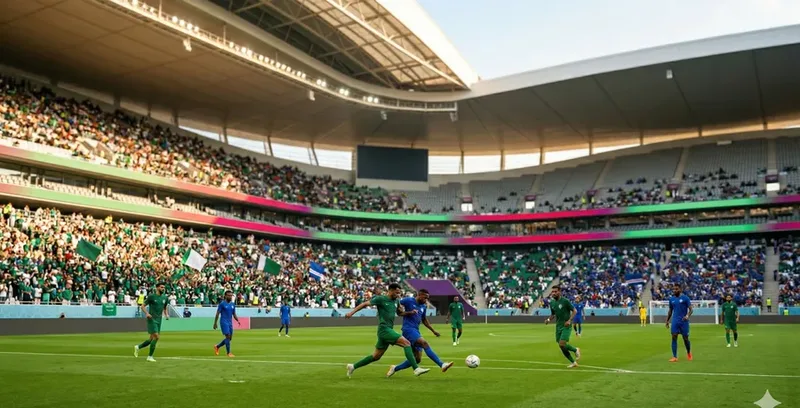 Algeria vs Austria
 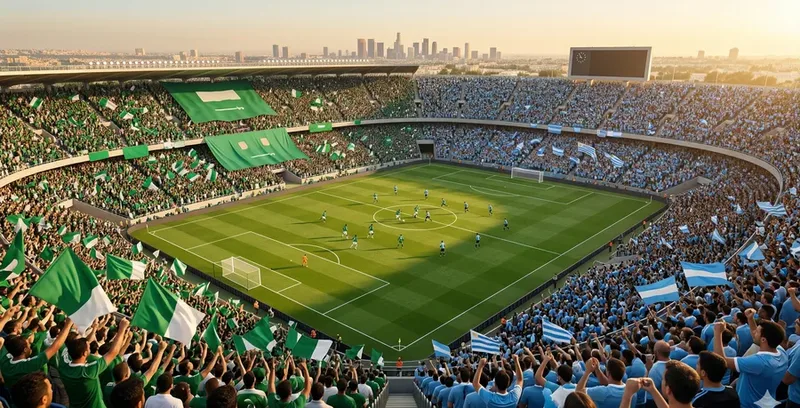 Jordan vs Argentina
 The Defending Champions Return
Group J is built around one question: can anyone stop Argentina? The defending world champions arrive in the United States and Canada as the tournament’s shortest-priced favourite at 1.34 odds, and the group draw has done little to suggest an upset is coming. Austria are a solid European outfit. Algeria carry genuine North African pedigree. Jordan represent one of the most remarkable qualifying stories in the tournament. But none of them are expected to prevent Argentina from marching through to the knockout rounds with minimum fuss.
For Australian supporters, this group carries a very specific emotional weight. It was Argentina who ended the Socceroos’ 2022 World Cup campaign in the Round of 16 at Ahmad bin Ali Stadium. That 2-1 defeat — Lionel Messi opening the scoring with a trademark low finish, Julian Alvarez doubling the lead, and Craig Goodwin pulling one back to set up a desperate final twenty minutes — remains one of Australian football’s proudest moments. Graham Arnold’s squad pushed the eventual world champions harder than most expected, and the image of the Socceroos standing on the pitch at full-time, applauded by their travelling supporters, endures as a reminder of how far Australian football has come on the global stage.
Now, four years on, Argentina return under a different kind of pressure. They are no longer the romantics chasing a third star for Messi. They are the establishment. The team everyone wants to beat. And the question that hangs over everything they do in this tournament is whether the post-Messi transition is truly complete — or whether the aura of invincibility disappears the moment the greatest player of his generation is no longer pulling the strings.
Argentina — The Weight of the Crown
FIFA Ranking: 1 | Group winner odds: 1.34
Argentina’s dominance of the current cycle has been extraordinary. The 2022 World Cup in Qatar. The 2024 Copa America. The Finalissima. Under Lionel Scaloni, La Albiceleste have achieved what so many supremely talented Argentine squads before them could not — consistent tournament success built on collective discipline rather than individual brilliance.
The defining question for 2026 is Messi himself. At 38, the Inter Miami captain has not formally retired from international duty, and Scaloni has been characteristically noncommittal about his involvement. If Messi is in the squad, his role will be ceremonial as much as tactical — a figure to inspire, a presence to unsettle opponents, but no longer the player who carries the team through six-and-a-half gruelling weeks of tournament football. If he is not, Argentina must prove they can win without him. The squad depth suggests they can.
Enzo Fernandez has matured into one of the world’s elite midfielders, combining the passing range and composure that made him the Best Young Player at the 2022 World Cup with a defensive intelligence that has developed considerably since his move to the Premier League. Julian Alvarez provides goal threat from multiple positions across the forward line. Alexis Mac Allister offers tactical flexibility and tireless work rate in central midfield. Behind them, Cristian Romero and Lisandro Martinez form a centre-back partnership that is as aggressive and uncompromising as any in international football.
Argentina’s weakness, if one exists at this level, is complacency. Defending champions have a mixed record in the group stage of subsequent tournaments — France were eliminated in the first round in 2002, Spain stumbled in 2014, Germany crashed out in 2018. The warning signs are always the same: a belief that quality will overcome preparation, that the name on the shirt is enough. Scaloni is too pragmatic a coach to allow that mindset to take hold, but the danger is real whenever a squad of this calibre faces opponents they are expected to dismiss.
Key player to watch: Enzo Fernandez — the fulcrum of everything Argentina do. His ability to dictate tempo, break pressing traps, and switch play with long diagonal passes is the engine that drives the defending champions.
Austria — European Solidity and the Alaba Question
FIFA Ranking: 24 | Group winner odds: 6.00
Austria’s rise over the past decade has been one of European football’s quieter success stories. From the wilderness of the 2010s — missing consecutive World Cups and European Championships — to becoming a side that regularly troubles the continent’s best, the Austrian football federation has rebuilt patiently and effectively. The squad that travels to the 2026 World Cup is the strongest Austria have assembled in a generation.
The narrative, however, is shaped by one player: David Alaba. The Real Madrid defender, who has spent the better part of his career among the elite of European club football, remains Austria’s most influential figure. His versatility — capable of playing centre-back, left-back, or in midfield — gives the coaching staff tactical flexibility that few national teams outside the top tier possess. Whether Alaba is fully fit and available for the tournament will go a long way to determining whether Austria can challenge Argentina for top spot or are left fighting for second.
Beyond Alaba, the squad has genuine quality throughout. Konrad Laimer brings relentless energy and pressing intensity from midfield, a player whose work rate can disrupt far more technically gifted opponents. Marcel Sabitzer offers creativity and goal threat from central and wide positions. Up front, Michael Gregoritsch provides a physical presence that makes Austria dangerous from crosses and set pieces — an area where they can compete with anyone in the group.
Austria’s approach under Ralf Rangnick has been defined by intensity. The pressing system is demanding, the transitions are rapid, and the collective commitment is absolute. In a group where Algeria and Jordan will both look to defend deep and frustrate, Austria’s ability to dominate territory and create chances through sustained pressure will be their primary weapon. Against Argentina, they will need to be more circumspect — but this is a squad with enough European-level experience to adapt tactically match by match.
Key player to watch: David Alaba — his fitness and form will define Austria’s tournament. When Alaba is on the pitch, Austria look like a side capable of reaching the knockout rounds. Without him, the defensive structure loses its organising intelligence.
Algeria — North African Pride and the Next Generation
FIFA Ranking: 32 | Group winner odds: 7.50
Algeria’s return to the World Cup is a source of enormous pride across North Africa. The Desert Foxes have been one of the continent’s most consistent performers over the past decade, winning the 2019 Africa Cup of Nations with a squad that combined technical excellence with the fierce collective spirit that defines Algerian football. Qualification for 2026 through the expanded CAF pathway confirms that Algeria remain a force, even as the golden generation that delivered the AFCON title begins to age out.
The post-Riyad Mahrez era is the central challenge. Mahrez, the former Manchester City winger whose dribbling and creativity carried Algeria through so many qualifying campaigns, has passed the baton to a new generation of forwards. The squad now relies on a different kind of attacking threat — more direct, more physically imposing, and built around pace on the counter-attack rather than the individual brilliance of a single playmaker.
Ismael Bennacer remains the heartbeat of the midfield. The AC Milan man’s ability to receive the ball under pressure, turn, and play progressive passes gives Algeria a platform to build from deep. His composure in tight spaces is a genuine asset in the group stage, where matches can be decided by which team handles the pressure of the occasion with greater calm. Around him, Said Benrahma provides flair and unpredictability from wide positions, and the defensive unit — hardened by years of competitive African qualifying — is disciplined and difficult to break down.
Algeria will approach this group with a clear tactical identity: defend in numbers, transition quickly, and target the space behind opposition full-backs with rapid, direct attacks. Against Argentina, survival will be the priority. Against Austria, the contest for second place begins in earnest. Against Jordan, Algeria will be expected to dominate — a match that could ultimately decide whether they advance.
Key player to watch: Ismael Bennacer — his ability to control the midfield tempo and resist the press will determine whether Algeria can compete against Austria for the second qualifying spot. When Bennacer dictates the rhythm, Algeria are a side that can frustrate anyone.
Jordan — The AFC’s Remarkable Rise
FIFA Ranking: 68 | Group winner odds: 51.00
Jordan’s qualification for the 2026 World Cup is one of the most significant achievements in the recent history of Asian football. For a nation with no prior World Cup experience, reaching the tournament through the AFC pathway — a qualification process that demands consistency across years of competitive fixtures — is a statement about the growth and ambition of Jordanian football.
The 2023 AFC Asian Cup, where Jordan reached the final before losing to Qatar, was the moment the football world took notice. That run, built on defensive organisation, set-piece quality, and an unyielding collective spirit, announced Jordan as a serious force in the Asian confederation. For Australian supporters who watched the Socceroos navigate the same qualifying landscape, Jordan’s presence at the World Cup is a reminder of how competitive the AFC has become. The days when Australia, Japan, South Korea, and Saudi Arabia could treat qualification as a formality are long gone.
The squad is built on domestic and regional league talent, supplemented by a growing number of players competing in European second divisions and the Gulf leagues. Mousa Al-Taamari, the creative forward who impressed during the Asian Cup campaign, provides the individual quality to unlock defences in moments of transition. Yazan Al-Naimat offers goal threat and physicality up front. The defensive unit, organised and committed, will be Jordan’s greatest asset in a group where they will face sustained pressure in every match.
Jordan’s objective in this group is realistic: compete in every fixture, target a positive result against Algeria, and ensure that the World Cup debut is marked by performances that inspire the next generation of Jordanian footballers. The gap between Jordan and Argentina is enormous on paper, and Austria’s European quality will present a different kind of challenge. But World Cups are defined by the moments when underdogs refuse to be overawed — and Jordan have already demonstrated, throughout their qualifying campaign, that they do not lack for courage.
Key player to watch: Mousa Al-Taamari — his movement between the lines and ability to carry the ball in transition gives Jordan a creative outlet that can trouble any defence on the counter-attack. In a squad without established stars, Al-Taamari is the player most likely to produce a moment of individual quality.
Group J Fixtures — What to Watch
| Match | Significance |
|---|---|
| Argentina vs Algeria | A repeat of their 2014 group stage meeting. Algeria will defend deep and hope to frustrate the champions; Argentina must avoid complacency |
| Austria vs Jordan | The match that sets the tone for the battle for second. Austria will expect to dominate, but Jordan’s Asian Cup run proved they can compete against sides ranked far above them |
| Argentina vs Jordan | Jordan’s chance to test themselves against the very best. A disciplined defensive display could earn global respect even in defeat |
| Algeria vs Austria | The decisive fixture for second place. Whoever wins this match will likely advance to the knockout rounds |
| Algeria vs Jordan | A contest between two sides who rarely meet at this level. Algeria’s African pedigree should tell, but Jordan will see this as their best chance for a positive result |
| Austria vs Argentina | The group decider. If Argentina have already qualified, rotation could give Austria an opportunity to claim top spot |
Prediction
| Pos | Team | Pts | Outcome |
|---|---|---|---|
| 1 | Argentina | 9 | Advance as group winners |
| 2 | Austria | 6 | Advance as runners-up |
| 3 | Algeria | 3 | Third place — best third-place contender |
| 4 | Jordan | 0 | Eliminated |
Argentina are the clearest group favourites in the entire tournament. The squad depth, the tactical maturity under Scaloni, and the motivation to defend their title point to a perfect group stage — three wins, top spot, and momentum building towards the knockout rounds. Austria’s European quality and Rangnick’s pressing system give them a comfortable edge over Algeria for second place, though the Algeria–Austria match will be tense and closely contested. Algeria have the defensive discipline to make life difficult for everyone, but lack the attacking depth to convert tight matches into wins consistently. Jordan will compete with pride and passion in every fixture, but the gap in squad quality between themselves and the other three sides is significant.
For Australian punters analysing the group markets, the World Cup 2026 odds page has the full breakdown of outright winner, Golden Boot, and group winner prices from major bookmakers. Those looking for a platform to follow the tournament can compare options in our Australian betting sites guide.
Australia Football’s World Cup 2026 coverage continues…
 Best Betting Sites
 Best Online Casinos
 Blackjack Sites
 Online Pokies
 Fast Payout Casinos
 PayID Casinos
 New Casinos 2026