England — perennial contenders, 1.45 favourites, and a potential Socceroos semi-final opponent — face 2018 World Cup finalists Croatia, an evergreen Ghana, and Panama in a group loaded with narrative. England have not won a major tournament since 1966, but Croatia (Moscow 2018 finalists) bring the kind of pedigree that makes them dangerous regardless of the rankings. For Australians, the connection runs deep: from Cameron Burgess to Riley McGree, the Socceroos squad is built on the English football pyramid, and a Round-of-32 or semi-final meeting with the Three Lions would be a moment a generation has never witnessed.





Group L — Winner Odds
| Team | Odds | Implied % |
|---|---|---|
 England England | 1.45 | 69.0% |
 Croatia Croatia | 4.40 | 22.7% |
 Ghana Ghana | 8.00 | 12.5% |
 Panama Panama | 46.00 | 2.2% |
Odds from major bookmakers as of 13 June 2026. Full odds breakdown
Group L Fixtures (AEST)
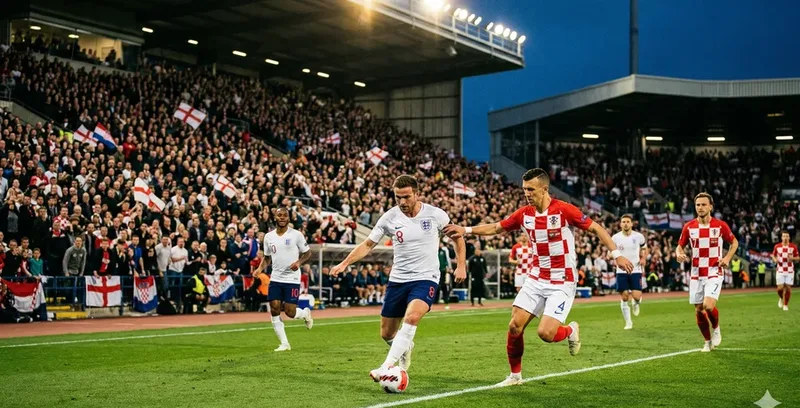 England vs Croatia
 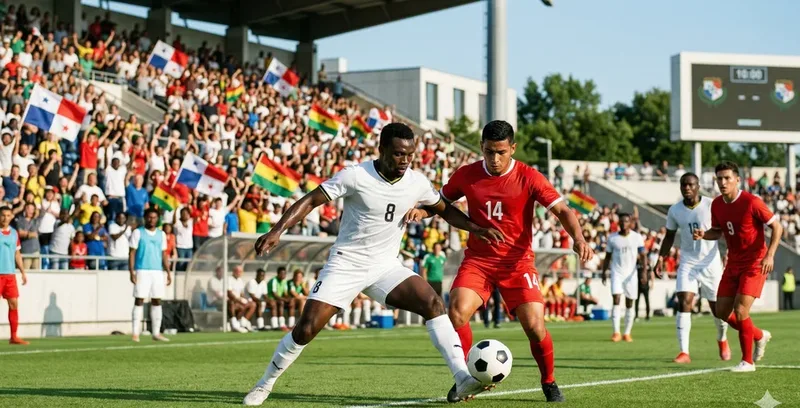 Ghana vs Panama
 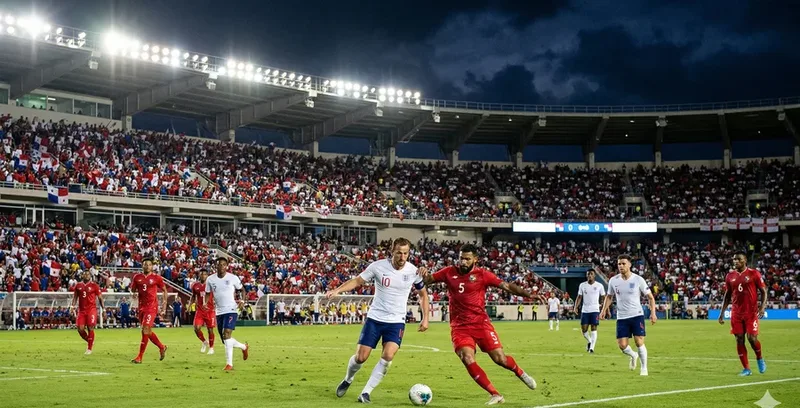 England vs Ghana
 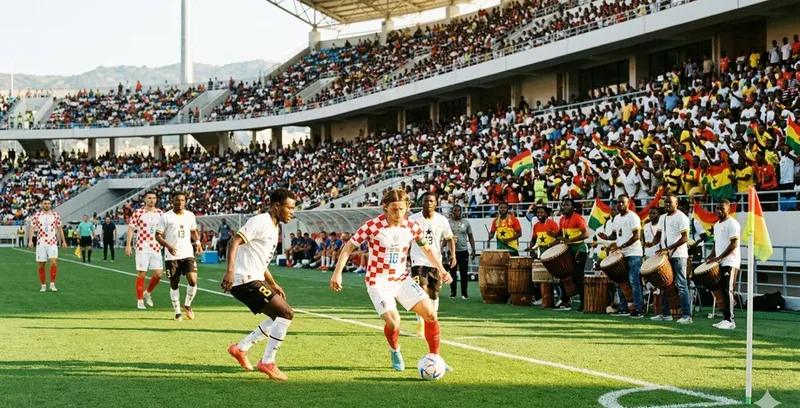 Panama vs Croatia
 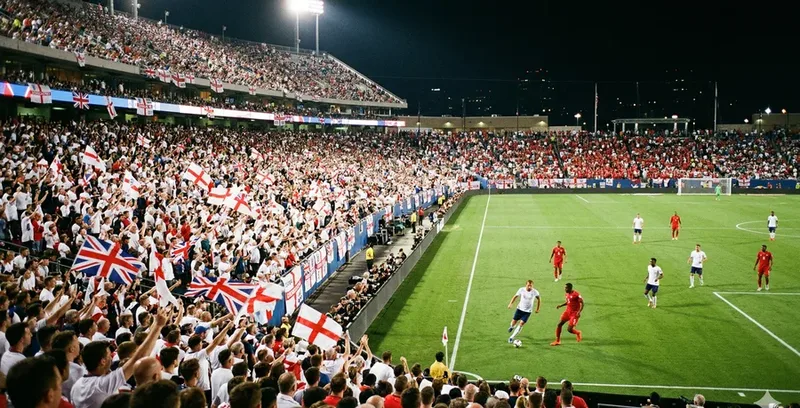 Panama vs England
 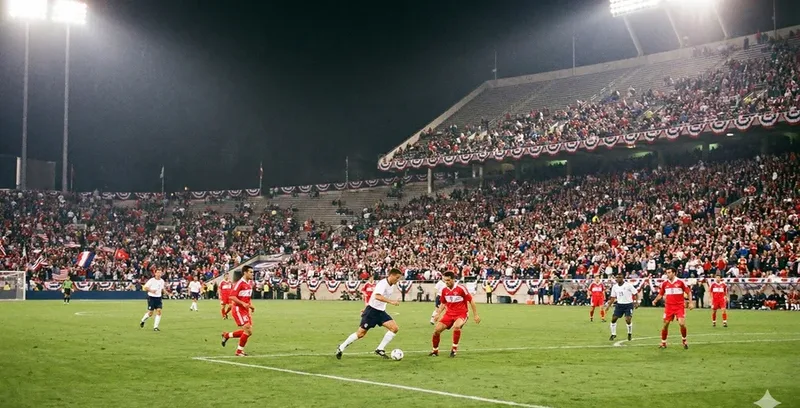 Croatia vs Ghana
 A Group Steeped in World Cup History
Group L is one of those draws that tells a story before a ball is kicked. England, perennial contenders who have not won a major tournament since 1966, arrive as heavy favourites at 1.45 odds. Croatia, the 2018 World Cup finalists who stunned the world with their run to the Moscow final, bring the kind of pedigree that makes them dangerous regardless of what the rankings say. Ghana return to the world stage with the flair and physicality that have made African sides a nightmare for European opponents at successive World Cups. And Panama, who shocked the football world by qualifying for Russia 2018, are back to prove that first appearance was no fluke.
For Australian readers, the England connection runs deep. The Socceroos’ squad is built on the English football pyramid — from the Premier League down through the Championship and League One, Australian players have been forging careers in England for decades. Cameron Burgess, Riley McGree, and a host of others know the culture, the pitches, and the intensity of English football intimately. Should the Socceroos produce an extraordinary run through the knockout rounds, England loom as a potential semi-final opponent. It is a tantalising prospect for a nation that has never played England at a World Cup.
Then there is the fixture that will dominate the pre-tournament build-up: England versus Croatia. Their 2018 World Cup semi-final in Moscow — where Mario Mandzukic’s extra-time winner broke English hearts — remains one of the most emotionally charged matches of the modern era. The rematch, now in a group-stage setting eight years later, carries a weight that transcends three points.
England — The Tournament’s Heaviest Burden
FIFA Ranking: 4 | Group winner odds: 1.45
England enter the 2026 World Cup as one of the favourites to win the entire tournament, and therein lies the problem. No nation carries the weight of expectation quite like England. Sixty years since Bobby Moore lifted the Jules Rimet trophy, every major tournament becomes a referendum on the state of English football. The quarter-final exit at Qatar 2022, the agonising Euro 2024 final defeat to Spain — each near-miss adds another layer of pressure on a squad that is, on pure talent alone, among the best three or four in the world.
Jude Bellingham is the centrepiece. At just 22, the Real Madrid midfielder has already established himself as one of the most complete players on the planet. His ability to drive from deep, arrive in the penalty area at precisely the right moment, and score decisive goals gives England a dimension that few other nations can match. Bellingham’s performances at Euro 2024 — particularly the overhead kick against Slovakia that rescued England from elimination — demonstrated the kind of individual brilliance that wins knockout matches.
Around Bellingham, the quality is extraordinary. Bukayo Saka provides relentless energy and end product from the right wing, combining the dribbling ability to beat defenders one-on-one with the discipline to track back and defend. Declan Rice anchors the midfield with the positional intelligence and passing range that has made him one of the Premier League’s most valuable players. Phil Foden offers creative ingenuity, Cole Palmer brings fearless finishing, and Harry Kane — likely in his final World Cup at 32 — remains one of the most prolific strikers in international football history.
England’s weakness is not in the squad. It is in the mind. Tournament football has consistently exposed a fragility under pressure — the inability to close out matches when leading, the tendency to retreat into a defensive shell when the occasion threatens to overwhelm. Gareth Southgate transformed England’s tournament culture, but whether his successor can maintain that progress while also unlocking the attacking potential of the most gifted English generation in decades is the central question of their campaign.
Key player to watch: Jude Bellingham — if he performs to his Real Madrid standard, England have the quality to win the tournament. If the occasion stifles him, as it has other English stars before, Group L becomes far more complicated than the odds suggest.
Croatia — Modric’s Last Dance
FIFA Ranking: 16 | Group winner odds: 4.40
Croatia are the most decorated small nation in the history of the World Cup. A country of four million people that has produced a World Cup finalist team, a third-place finisher, and a generation of midfielders that would grace any national side in the world. At the heart of it all, for the better part of two decades, has been Luka Modric.
This is almost certainly Modric’s last World Cup. At 40, the Ballon d’Or winner and Real Madrid legend defies every assumption about ageing in elite football. His passing remains surgical, his vision unmatched, and his ability to control the tempo of a match — to slow it down when his team needs calm, to accelerate it when an opening appears — has not diminished with age. What has changed is the squad around him. The golden generation that reached the 2018 final in Moscow is ageing out. Ivan Perisic, Mario Mandzukic, and Ivan Rakitic are gone. The new generation, led by Josko Gvardiol at centre-back and Lovro Majer in midfield, carries talent but not yet the experience of performing under the white-hot intensity of a World Cup knockout round.
Croatia’s approach will be familiar to anyone who watched their 2018 and 2022 campaigns: control possession through midfield superiority, play through the thirds with patience, and rely on moments of individual quality to break deadlocks. They will not be intimidated by England — the 2018 semi-final proved that. But the gap in squad depth between what Croatia had in Moscow and what they bring to 2026 is real.
The England match is the fixture that defines their group. A result there — even a draw — and Croatia are likely through. A defeat, and the margins against Ghana and Panama become uncomfortably thin for a side that prides itself on tournament composure.
Key player to watch: Luka Modric — his final bow. The greatest Croatian footballer of all time, playing what may be his last competitive matches on the world stage. When Modric is conducting the orchestra, Croatia are a side that can beat anyone in the tournament.
Ghana — African Pedigree and Premier League Power
FIFA Ranking: 42 | Group winner odds: 8.00
Ghana’s World Cup history is short but spectacular. The 2010 quarter-final against Uruguay — Asamoah Gyan’s missed penalty after Luis Suarez’s deliberate handball on the line — remains one of the most dramatic moments in tournament history. The Black Stars have not reached those heights since, but the talent pipeline from Ghanaian football into Europe’s top leagues continues to produce players of genuine quality.
Thomas Partey anchors the midfield with the authority and technical ability that has made him a cornerstone of Arsenal’s Premier League title challenges. His capacity to shield the defence, break up opposition attacks, and launch transitions with incisive forward passes gives Ghana a midfield presence that few African nations can match. Around him, the squad blends Premier League experience with the raw pace and physicality that makes African sides so difficult to prepare for in a group-stage setting.
Mohammed Kudus provides the creative spark. The Ajax and subsequently Hammers star combines dribbling ability with an eye for goal that makes him unpredictable and dangerous. Inaki Williams offers blistering pace on the wing. The defensive unit, anchored by players competing in Europe’s top five leagues, has the organisation to frustrate more fancied opponents.
Ghana will approach this group with clear-eyed ambition. England are the target — not to beat, necessarily, but to take points from. The matches against Croatia and Panama are where qualification will be won or lost. Ghana’s pace on the counter and set-piece threat from Partey’s delivery make them dangerous in exactly the kind of tight, tense group-stage matches that decide who advances and who goes home.
Key player to watch: Thomas Partey — the engine. His ability to dominate the midfield against Croatia and Panama will determine whether Ghana have the platform to compete for a knockout-round place.
Panama — CONCACAF Grit and the Memory of 2018
FIFA Ranking: 61 | Group winner odds: 46.00
Panama’s qualification for the 2018 World Cup in Russia remains one of the greatest stories in CONCACAF history. An entire nation came to a standstill when Roman Torres’s goal against Costa Rica sealed their place. At the tournament itself, they lost all three group matches — but competed with a fierce pride that earned respect across the footballing world. Felipe Baloy’s goal against England, making it 6-1 in a match long since decided, was celebrated as though it were a World Cup final winner.
Returning to the World Cup in 2026 validates Panama’s place in the international game. The squad has evolved since Russia. A new generation of players, many plying their trade in MLS and Liga MX, brings greater tactical sophistication than the 2018 side. What has not changed is the mentality — the CONCACAF resilience forged through qualifying campaigns played in hostile Central American stadiums, on difficult pitches, in oppressive heat.
Panama will be the lowest-ranked team in Group L by a significant margin. The odds of 46.00 tell the story plainly: the market does not expect them to advance. But World Cups are not played on paper. Panama’s defensive discipline, their ability to frustrate opponents by denying space and time, and their set-piece threat from dead-ball situations make them a side that nobody will relish playing. A point against Ghana or Croatia is achievable, and a single point in the expanded format could be enough to keep them in contention deep into the group stage.
Key player to watch: Jose Fajardo — the forward whose movement and work rate give Panama an outlet when they are under sustained pressure. His ability to hold the ball up and bring others into play will be vital against sides that will dominate possession.
Group L Fixtures — What to Watch
| Match | Significance |
|---|---|
| England vs Croatia | The headline fixture. A rematch of the 2018 semi-final that broke English hearts — narrative, tension, and tactical intrigue in equal measure |
| Ghana vs Panama | The match that could define the fight for third place. Both sides need a result here to stay in the conversation |
| England vs Ghana | England’s pace will be tested by Ghana’s counter-attacking speed. Partey against Rice is a midfield duel for the purists |
| Croatia vs Panama | Croatia’s expected three points — but Panama’s defensive discipline could make this far harder than the odds suggest |
| England vs Panama | England should dominate, but the memory of Baloy’s goal in 2018 will linger. Panama have nothing to lose |
| Croatia vs Ghana | The decisive fixture for second place. Modric’s passing against Partey’s pressing — a fascinating tactical contest |
Prediction
| Pos | Team | Pts | Outcome |
|---|---|---|---|
| 1 | England | 9 | Advance as group winners |
| 2 | Croatia | 6 | Advance as runners-up |
| 3 | Ghana | 3 | Best third-place contender |
| 4 | Panama | 0 | Eliminated |
England’s squad depth and individual quality make them the most likely group winners by a comfortable margin. The talent available to their manager is sufficient to navigate all three fixtures without dropping points — though the Croatia match will be the test of whether this side has the tournament composure to match their Premier League pedigree. Croatia’s experience and midfield control give them the edge over Ghana for second place, with Modric’s ability to manage the tempo of tight matches proving the difference. Ghana have the talent to cause an upset, and their pace on the counter means they will not go quietly — a third-place finish with three points could be enough to advance in the expanded format. Panama will compete fiercely in every match but lack the squad depth to sustain a challenge across all three fixtures.
For Australian supporters, this group is worth watching closely. If the Socceroos advance from Group D, the knockout bracket could put them on a collision course with the Group L winners. The prospect of facing England — the country where so many Socceroos have forged their careers — at a World Cup would be a historic occasion for Australian football.
For those analysing the group markets, the World Cup 2026 odds page has the full breakdown of outright winner, Golden Boot, and group winner prices from major bookmakers. Those looking for a platform to follow the tournament can compare options in our Australian betting sites guide.
Australia Football’s World Cup 2026 coverage continues…
 Best Betting Sites
 Best Online Casinos
 Blackjack Sites
 Online Pokies
 Fast Payout Casinos
 PayID Casinos
 New Casinos 2026