A group loaded with Australian subplots even though the Socceroos aren't in it. Japan — the Socceroos' fiercest AFC rival — and Tunisia — beaten by Mitch Duke's iconic 2022 header — share the pool with one of European football's grandest traditions in the Netherlands and a Sweden side that has quietly built a reputation as one of the toughest opponents at major tournaments. No other non-Socceroos group will get more Australian viewing attention; favouritism is clear but qualification is not guaranteed for anyone.





Group F — Winner Odds
| Team | Odds | Implied % |
|---|---|---|
 Netherlands Netherlands | 1.71 | 58.5% |
 Japan Japan | 4.40 | 22.7% |
 Sweden Sweden | 5.30 | 18.9% |
 Tunisia Tunisia | 11.00 | 9.1% |
Odds from major bookmakers as of 16 July 2026. Full odds breakdown
Group F Standings
| Team | P | W | D | L | GF | GA | GD | Pts |
|---|---|---|---|---|---|---|---|---|
| Netherlands | 3 | 2 | 1 | 0 | 10 | 4 | +6 | 7 |
| Japan | 3 | 1 | 2 | 0 | 7 | 3 | +4 | 5 |
| Sweden | 3 | 1 | 1 | 1 | 7 | 7 | 0 | 4 |
| Tunisia | 3 | 0 | 0 | 3 | 2 | 12 | -10 | 0 |
6 of 6 matches played — updates automatically after every match. All matches & results
Group F Fixtures (AEST)
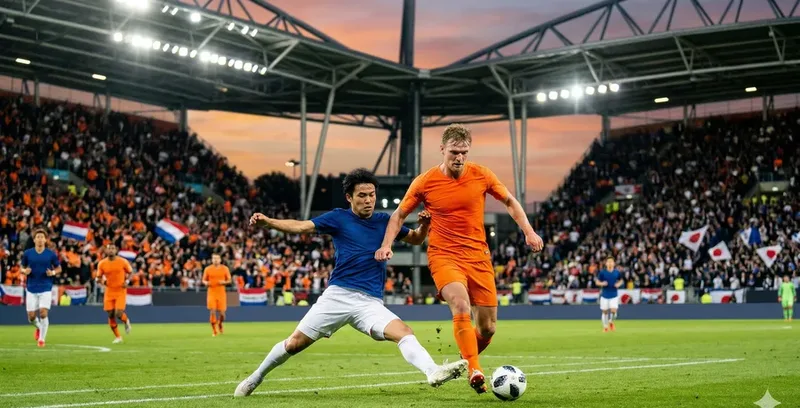 Netherlands vs Japan
 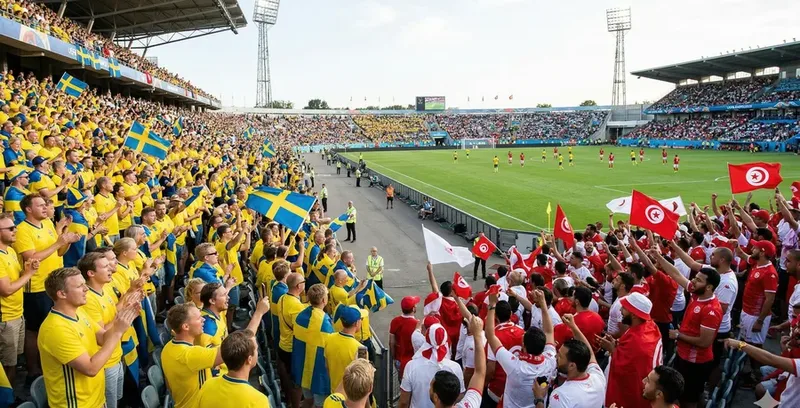 Sweden vs Tunisia
 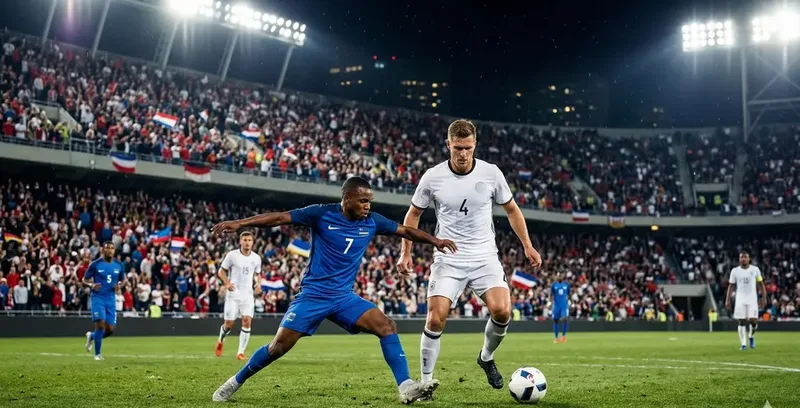 Netherlands vs Sweden
 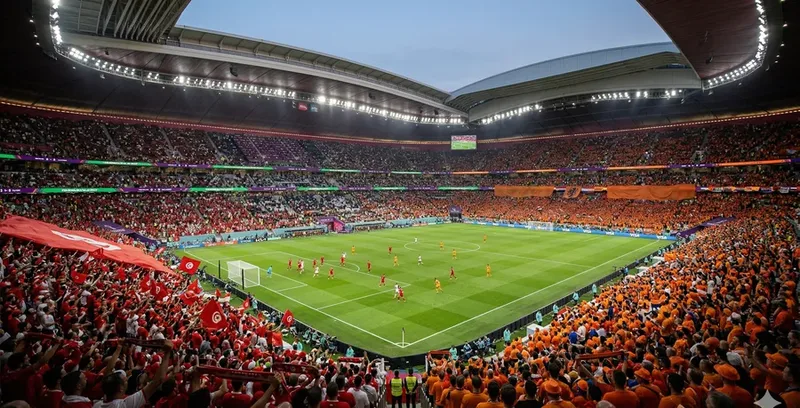 Tunisia vs Japan
 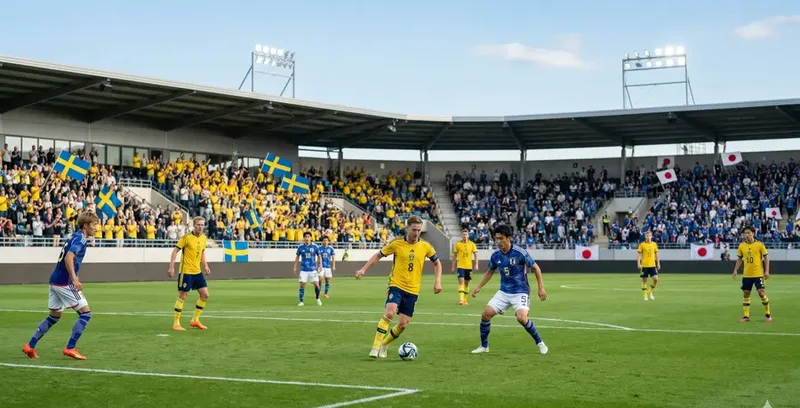 Japan vs Sweden Tunisia vs Netherlands
 A Group Loaded with Australian Subplots
Group F is not the Socceroos’ group. Australia were drawn into Group D, alongside the USA, Turkey, and Paraguay. Yet no other group at the 2026 FIFA World Cup carries more resonance for Australian football fans than this one. Two of the teams that have defined modern Socceroos history — Japan and Tunisia — sit in the same pool as the Netherlands and Sweden, creating a quartet that Australians will watch with more than passing interest.
Japan are the team the Socceroos have spent the better part of two decades trying to overcome. Tunisia are the team Mitch Duke’s iconic header defeated in Qatar. The Netherlands are one of European football’s grandest traditions. Sweden are the Scandinavian side that has quietly built a reputation as one of the most difficult opponents at major tournaments. Together, they form a group where favouritism is clear but qualification is not guaranteed for anyone.
For Australia, the significance is straightforward: if the Socceroos finish second or third in Group D and advance to the Round of 32, the knockout bracket could easily deliver a collision with one of these sides. Understanding Group F is not an academic exercise — it is preparation.
Netherlands — The Favourites with a Point to Prove
FIFA Ranking: 3 | Group winner odds: 1.71
The Netherlands arrive at the 2026 World Cup as the clear group favourites and one of the tournament’s genuine contenders. This is a squad that reached the quarter-finals at Qatar 2022 before falling to Argentina on penalties, and the intervening years have only added depth and maturity to what was already an impressive talent pool.
Virgil van Dijk anchors the defence with the authority that comes from years as one of the Premier League’s most commanding centre-backs. Cody Gakpo, who announced himself to the world with three goals at Qatar 2022, has developed into a consistent creative threat capable of operating across the front line. Xavi Simons has emerged as the generational talent the Dutch system has been cultivating — his ability to receive between the lines, turn, and accelerate makes him one of the most dangerous midfielders at the tournament. Behind them, Frenkie de Jong provides the metronome passing that has been a hallmark of Dutch football since the days of Cruyff.
The Dutch system has always prioritised attacking football, and the current iteration is no different. Ronald Koeman’s side play a 4-3-3 that demands technical excellence from every position. The full-backs push high, the centre-backs split wide to receive from the goalkeeper, and the midfield triangle creates numerical superiority in central areas. It is beautiful to watch when it works — and vulnerable when opponents disrupt the rhythm with sustained pressing or direct, physical football.
The concern: Dutch tournament history is littered with near-misses. Three World Cup final defeats, a reputation for internal tension at major tournaments, and an occasional brittleness under sustained pressure have all contributed to a narrative that the Oranje flatter to deceive when the stakes are highest. This squad has the talent to win Group F comfortably. Whether they have the resilience to progress deep into the knockout rounds is the question that follows them.
Japan — The AFC Powerhouse and Australia’s Greatest Rival
FIFA Ranking: 15 | Group winner odds: 4.40
For Australian football fans, Japan requires no introduction. The two nations have been locked in one of Asian football’s defining rivalries for over two decades — a competition that has produced drama, heartbreak, and moments of extraordinary tension across Asian Cup finals, World Cup qualifiers, and friendly matches that were anything but friendly.
Japan’s 3-1 victory in the 2011 Asian Cup final in Doha, their last-gasp qualifying wins that denied Australia more comfortable routes to World Cups, and the relentless tactical chess matches between the two sides in AFC qualifying — these are the memories that make Japanese football deeply personal for Socceroos supporters. When Japan play at a World Cup, Australians are never neutral.
And this Japan squad may be the strongest the Blue Samurai have ever assembled. Takefusa Kubo has established himself as one of La Liga’s most creative wide players at Real Sociedad. Kaoru Mitoma’s devastating dribbling from the left flank has terrorised Premier League defences for three seasons. Wataru Endo provides midfield solidity and intelligence from the base of midfield. The depth is remarkable — Japan can rotate eleven players and barely lose quality, a luxury that few Asian nations have ever enjoyed.
Tactically, Japan have evolved under successive coaches into a side that can play multiple systems with equal conviction. They can dominate possession against weaker opponents or sit in a compact 5-4-1 and counter with blistering speed against stronger ones. Their pressing is co-ordinated, their set-piece delivery is precise, and their defensive structure has improved markedly since Qatar 2022.
The Socceroos subplot: If Australia advance from Group D — which is entirely possible as runners-up or as a best third-placed team — the Round of 32 bracket could pit them directly against the Group F runners-up. That means a potential Socceroos-Japan knockout match, a fixture that would electrify both nations. Japanese fans following Group D results will be doing the same calculations in reverse. The AFC rivalry could be renewed on the biggest stage of all.
Key player to watch: Takefusa Kubo — his ability to create something from nothing in tight spaces is precisely the kind of individual quality that wins group-stage matches.
Sweden — The Scandinavian Machine
FIFA Ranking: 20 | Group winner odds: 5.30
Sweden have made a habit of quietly progressing at World Cups while more celebrated teams falter. Their quarter-final run at Russia 2018 — achieved without Zlatan Ibrahimovic, who had retired from international football — demonstrated that Swedish football’s strength has never been about individual brilliance. It is about the system, the collective, and an almost unshakeable belief that disciplined football wins tournaments.
The current squad represents a blend of experience and emerging talent. Alexander Isak has become one of the Premier League’s most prolific strikers at Newcastle United, combining technical skill with an ice-cold finishing instinct that separates elite forwards from good ones. Dejan Kulusevski provides energy and creativity from wide positions, while Victor Lindelof brings organisational quality to the back line.
Sweden’s tactical approach is pragmatic. They defend in a deep, compact block, concede few chances, and strike efficiently on the counter through Isak’s movement and pace. Set pieces are a weapon — Sweden scored more goals from dead-ball situations than any other European team in qualifying. They do not try to outplay opponents; they try to outlast them.
The challenge: Sweden’s lack of midfield creativity can be exposed by teams that dominate possession and force them to defend for extended periods. Against the Netherlands, who will monopolise the ball, Sweden’s game plan will be tested to its limits. Against Japan, whose pressing intensity will deny Sweden the transition moments they crave, the match could become an uncomfortable battle for territory in midfield. Sweden’s ceiling in this group is second place, but the floor — if Japan and the Dutch both perform — is elimination.
Tunisia — The North African Fighters and a Qatar 2022 Memory
FIFA Ranking: 39 | Group winner odds: 11.00
No Australian football fan can think about Tunisia without remembering 22 November 2022 at Al Janoub Stadium in Al Wakrah. The Socceroos had lost their opener to France 4-1 and were staring down a group-stage exit. Tunisia, who had drawn 0-0 with Denmark, stood between Australia and survival. In the 23rd minute, Craig Goodwin swung in a cross from the left, and Mitch Duke — running beyond the Tunisian defence — met it with a glancing header that nestled inside the far post. The 1-0 victory was Australia’s first World Cup win since 2010 and reignited the nation’s belief that the Socceroos could compete on the global stage.
For Tunisia, that defeat was a cruel blow. They had arrived in Qatar with genuine ambitions of progressing from the group — and they nearly did, holding Denmark and putting in a spirited performance against France in the final match. The Eagles of Carthage have been a fixture at recent World Cups, qualifying in 2018 and 2022 on the back of a well-organised defensive structure and a passionate support base that travels in significant numbers.
The 2026 squad carries many of the same characteristics. Tunisia are defensively disciplined, difficult to break down, and capable of producing performances well above their ranking suggests. Ellyes Skhiri provides midfield control and physicality, while the defensive line is marshalled by veterans who understand the rhythms of tournament football. Going forward, Tunisia rely on moments of quality rather than sustained possession — quick transitions, intelligent movement, and clinical finishing when opportunities arise.
The reality: Tunisia are the longest odds in Group F for a reason. The Netherlands, Japan, and Sweden all possess superior squad depth and more consistent recent form. However, Tunisia have proven at consecutive World Cups that they can compete for sixty, seventy, even eighty minutes against any opponent. Their challenge is maintaining that level across three group matches — and finding the goals that their defensive effort deserves.
Group F Fixtures — The Australian View
| Match | Significance for the Socceroos |
|---|---|
| Netherlands vs Japan | The marquee fixture. If Japan take points here, they build momentum as a genuine Round of 32 threat |
| Sweden vs Tunisia | A match the Socceroos will want Sweden to win — keeping Japan in check for the runners-up spot |
| Netherlands vs Sweden | Likely a Dutch win. Sweden’s defensive approach may limit the damage but three points for the Oranje is the expected outcome |
| Japan vs Tunisia | Japan should win. A repeat of Qatar 2022 heroics from Tunisia would be a remarkable upset |
| Netherlands vs Tunisia | The Tunisians held Denmark at Qatar 2022 — a point here would be a statement result |
| Japan vs Sweden | The match that likely decides second place. The winner advances, the loser faces an anxious wait on third-place calculations |
Prediction
| Pos | Team | Pts | Outcome |
|---|---|---|---|
| 1 | Netherlands | 9 | Advance as group winners |
| 2 | Japan | 6 | Advance as runners-up |
| 3 | Sweden | 3 | Third — may not be enough for best third-place qualification |
| 4 | Tunisia | 0 | Eliminated |
The Netherlands have the squad depth and tactical quality to win all three matches and top the group with a perfect record. Japan’s combination of technical excellence, pressing intensity, and squad depth makes them clear favourites for second place — and a daunting prospect for whoever faces them in the Round of 32. Sweden will compete hard but lack the creative spark to overcome both the Dutch and the Japanese. Tunisia, for all their fighting spirit, face a group where the quality gap is too wide to bridge across three matches.
For Australian fans, the key takeaway is this: Japan are coming through this group. If the Socceroos advance from Group D, a knockout clash against the Blue Samurai is one of the most likely scenarios — and one of the most tantalising. The AFC rivalry, renewed on the World Cup stage, would be appointment viewing for every football supporter in Australia.
For those analysing the group markets, the World Cup 2026 odds page has the full breakdown of outright winner, Golden Boot, and group winner prices. Those looking for a platform to follow the tournament can compare options in our Australian betting sites guide.
Australia Football’s World Cup 2026 coverage continues with group previews for all 12 groups. Follow the Socceroos’ journey on our World Cup hub.
 Best Betting Sites
 Best Online Casinos
 Blackjack Sites
 Online Pokies
 Fast Payout Casinos
 PayID Casinos
 New Casinos 2026